
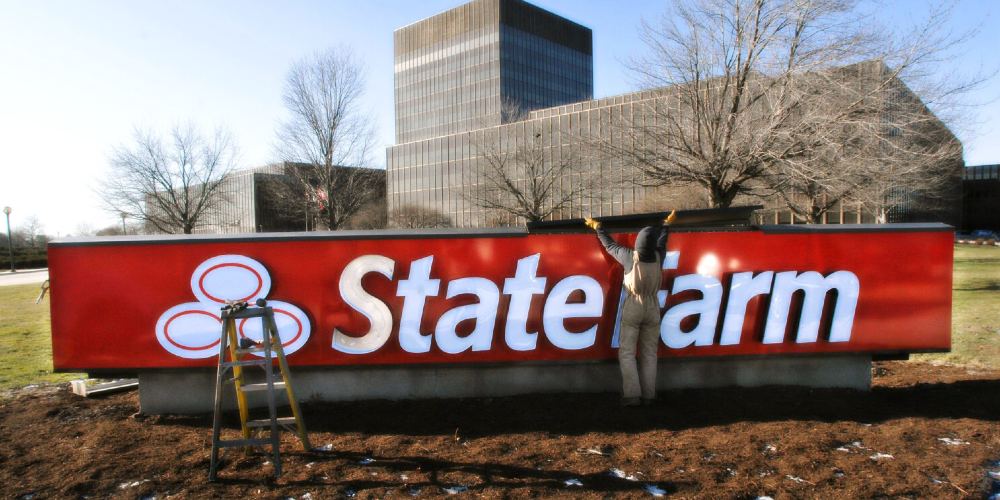
Editor’s Commentary: State Farm, the nation’s largest property insurer by volume, is pulling out of California. They will not be selling property insurance in the state anymore for a lot of obvious reasons including rising costs that are outpacing inflation, rampant crime, surging homelessness, the illegal alien invasion, and overall horrible policies from the Democrat-run government.
But as one might expect, the primary culprit cited by most corporate media sources I’ve read point to one major issue: climate change. Why? Because climate change is supposedly the root cause of literally every single possible negative event that has happened, is happening, or will happen… at least in the minds of the indoctrinated cultists.
Below is an article with all the details. As a quick note, I will avoid whenever possible linking to corporate media news sources. While they have the resources to cover national and world news, linking to their articles aids in giving them credibility that they do not deserve. Instead, I will be generating generic reporting that states the facts whenever possible. Here’s the article generated from a corporate media source:
State Farm General Insurance Company has made an announcement stating that it will no longer accept new applications for business and personal lines of property and casualty insurance. The decision comes as a result of significant increases in construction costs surpassing inflation, a rising exposure to catastrophic events, and a challenging reinsurance market, as explained in the company’s press release on Friday.
It is important to note that existing policyholders of home insurance will not be affected by this change, and new applications for personal auto insurance will still be accepted, according to the Wall Street Journal.
State Farm, which is one of California’s largest insurers, holds the position of the nation’s largest home insurer in terms of premium volume, as reported by the same source.
In its statement, State Farm acknowledges the efforts made by Governor Newsom’s administration, legislators, and California’s Department of Insurance in mitigating wildfire losses. The company expresses its commitment to collaborating with the CDI (California Department of Insurance) to help enhance market capacity.
The decision to halt new applications is primarily aimed at improving the financial strength of the Fortune 500 insurance giant.

Michael Soller, the deputy insurance commissioner for Northern California, cited climate change as one of the factors influencing State Farm’s choice. He emphasizes that the reasons behind the decision, such as climate change, escalating reinsurance costs affecting the entire insurance industry, and global inflation, are beyond their control. Soller underlines the significant wildfire risk in California as a fundamental contributor to the state’s insurance challenges.
Soller highlights various wildfire loss mitigation efforts undertaken by the governor, lawmakers, and insurance regulators, including the provision of community fire-prevention grants and the establishment of fire breaks. Additionally, he reveals that California has initiated an insurance discount program that takes into account consumers’ endeavors to mitigate wildfire risks.
California faces some of the highest housing costs in the nation, which have exacerbated the state’s homelessness crisis, according to Fox Business. KUSI reports that over the past five years, the state has allocated $20 billion toward addressing this issue. However, despite substantial taxpayer investments, the problem continues to worsen.
State Senate Minority Leader Brian Jones (R) suggests that a solution exists and points to Texas as an example. During his visit to Houston, he observed a lack of large tent encampments and a minimal number of panhandlers, unlike in California. Jones highlights Texas’s enforcement of laws related to drug crimes, petty theft, and sexual assault, as well as their prohibition of tent encampments. He emphasizes the need to address the challenge of homelessness in a compassionate manner while acknowledging the importance of maintaining proper conditions on the streets.
Overall, State Farm’s decision to cease accepting new applications for certain insurance lines reflects its efforts to address the financial challenges posed by rising construction costs, increased catastrophe exposure, and a difficult reinsurance market. The company will continue to support existing policyholders while working with regulatory bodies to strengthen the insurance market. The impact of climate change and California’s wildfire risks are significant factors influencing the insurance landscape, and the state continues to grapple with high housing costs and a growing homelessness crisis.
Bypass Big Tech Censors

Starting the Day With a Scripture-Inspired Roast Helps Center Your Thoughts on Eternal Truths Amid Temporal Pressures
The world can seem chaotic, especially right after we wake up. Many believers start their mornings reaching for something familiar — a hot cup of coffee — yet end up settling for mediocre brews that do little more than deliver a caffeine jolt. The daily grind of life, with its endless distractions, news cycles, and responsibilities, can leave even the most faithful feeling spiritually parched alongside their physical fatigue. What if your morning ritual could do more than wake you up? What if it could ground you in truth, nourish your body with exceptional quality, and quietly advance a kingdom purpose at the same time?
That’s the promise — and the reality — behind Promised Grounds Coffee. This Christian-founded company doesn’t just roast beans; it approaches every step as an act of worship and discipleship. By selecting only the top 10% of specialty-grade beans, ethically sourced from dedicated farmers in Central and South America, and small-batch roasting them with reverence in Austin, Texas, Promised Grounds delivers what many describe as the best coffee available — never burnt, never bland, but rich with origin stories and layered flavors that honor God’s creation.
From the vibrant Psalm 27 Roast (a light, bright medium option) to the bold yet peaceful 2 Timothy 1:7 Decaf, each bag carries a Scripture verse that turns your daily pour into a gentle reminder of faith. And through their Ounce Per Ounce Promise, every ounce of coffee you enjoy provides an equal ounce of clean water to families in need via partnership with Filter of Hope — literally brewing hope for body and soul, one cup at a time.
The challenge for today’s Christians runs deeper than finding a decent cup. In an age of convenience-driven consumerism, it’s easy to support companies that dilute values or remain silent on matters of faith. Many believers want their everyday choices — from what they drink to how they spend — to reflect discipleship rather than just convenience. Promised Grounds solves this by weaving Christian excellence into the entire process: beans nurtured with prayerful stewardship by farming families, roasted as an offering rather than a commodity, and packaged with Bible verses to encourage a mindset of gratitude and purpose from the first sip. Reviewers consistently praise the smooth, rich profiles — whether enjoyed black in a drip maker, iced on a warm day, or shared in fellowship — noting how the quality stands toe-to-toe with premium secular brands while delivering something far more meaningful.
This integration of faith and flavor addresses a real need in Christian households and ministries. Busy parents, church leaders, and remote workers alike report that starting the day with a Scripture-inspired roast helps center their thoughts on eternal truths amid temporal pressures. The coffee’s exceptional character — bright citrus notes in lighter roasts or deep chocolate undertones in bolder ones — comes from meticulous selection and careful roasting that respects the bean’s natural gifts rather than masking them. It’s the kind of coffee that elevates a simple quiet time, fuels productive workdays, or sparks meaningful conversations when shared at Bible studies or outreach events. And because it’s ethically sourced with integrity, every purchase supports sustainable livelihoods for farmers who treat their crops like family harvests.
For those leading churches or small groups, the impact multiplies. Promised Grounds offers bundles and options perfect for hospitality ministries, turning ordinary coffee service into an opportunity to point people toward the living water of Christ. Imagine greeting visitors with a warm cup whose very bag carries God’s Word — a subtle yet powerful witness that aligns with the Great Commission. The company’s Texas roots and commitment to “brewing hope” resonate especially with believers who value American enterprise paired with global compassion.
Of course, quality alone isn’t enough if the experience feels out of reach. Promised Grounds keeps it accessible with practical perks like free shipping on orders over $40, sample sets for discovering favorites, and thoughtful add-ons such as faith-themed mugs. Whether you prefer whole beans for fresh grinding, grounds for convenience, or even bulk options for larger households and ministries, the result is consistently superior coffee that makes discipleship feel integrated rather than added on.
As you consider how to align even the smallest habits with your walk with God, Promised Grounds Coffee stands out as a refreshing solution. It tackles the dual problems of subpar daily sustenance and disconnected consumption by offering a product that genuinely excels in taste while advancing a mission of clean water, farmer dignity, and scriptural encouragement. Believers who make the switch often describe it as more than a beverage upgrade — it becomes part of their rhythm of gratitude, a daily invitation to remember that every good gift comes from above.
If you’re ready to transform your mornings (and perhaps your church gatherings) with coffee that honors both exceptional craftsmanship and Christian values, I encourage you to explore what Promised Grounds has to offer. One sip at a time, you’ll be nourishing your body, refreshing your spirit, and participating in something far greater — all while enjoying what truly is among the best coffee available.


