
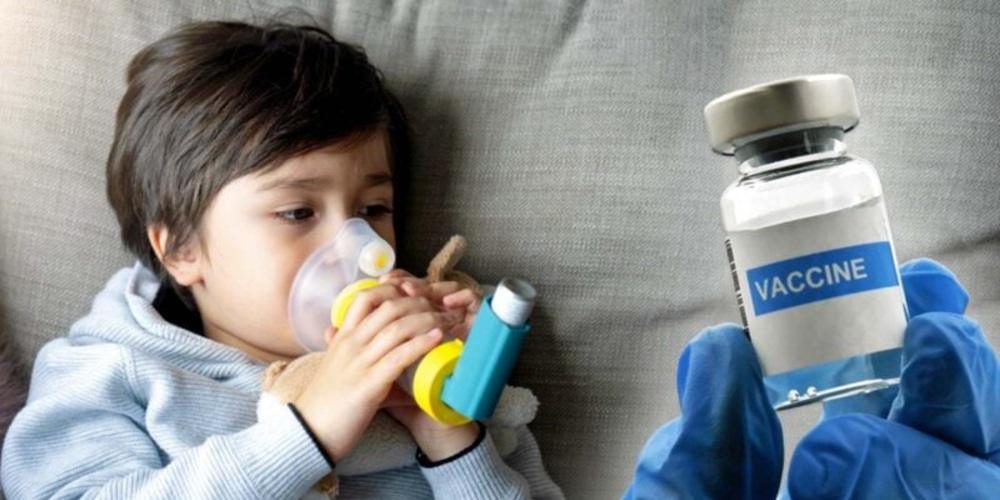
A new study of more than 14,000 children enrolled in Florida Medicaid found links between childhood vaccinations and higher rates of health issues including asthma, autism, attention-deficit hyperactivity disorder (ADHD) and respiratory infections.
The study, written by independent researcher Josh Mittledorf and Children’s Health Defense Chief Scientific Officer Brian Hooker and published in the peer-reviewed Journal of Independent Medicine, analyzed medical records from 1990 to 2010 for 14,235 children whose health histories were available from birth through age 10.
They found that children with the highest recorded number of vaccinations were more than twice as likely to be diagnosed with asthma, autism and ADHD as children with no documented vaccinations.
Autism was linked to combinations of hepatitis B (Hep B) and measles-mumps-rubella (MMR) shots. Developmental delays correlated with the MMR/Hep B combination, the number of flu shots and the total number of recorded vaccinations.
The flu vaccine demonstrated some of the strongest associations with adverse health outcomes. Children who got the flu shot had approximately four times the rates of asthma and three times the rate of autism as other children.
“The message is that the childhood vaccination schedule must be evaluated as a whole,” the authors concluded. “The aggregate burden on the immune system of many vaccine challenges during the few years when the immune system is not yet fully mature appears to be broadly damaging to health.”
What the Florida Medicaid records showed
The Florida Medicaid database contains records for more than 10 million patients. Of the 14,235 children studied, 9,703 had at least one documented vaccination, while 4,532 had no vaccinations.
The researchers examined associations between vaccination status and diagnoses of autism, developmental delay, ADHD, asthma, respiratory infections, ear infections, skin rashes, streptococcal infections and fever.

In total, 4,360 had an asthma diagnosis, 2,267 had ADHD, 4,411 had developmental delays and 152 had autism.
Children with no recorded vaccinations had a 21% annual probability of receiving medical attention for a respiratory infection, compared with 47% in the highest vaccination category.
The total number of diagnoses increased with the number of recorded vaccine doses, the study showed.
The flu, MMR, and combined diphtheria-tetanus vaccines were associated with the worst outcomes.
DTP-Hib (Haemophilus influenzae type b), HPV and pneumococcal vaccines were associated with the least detrimental outcomes.
The researchers also identified associations between flu shots and developmental delays, respiratory infections and other conditions. Several diagnoses increased with the number of recorded flu vaccinations.
The authors acknowledged that the study could not establish causation and confounding factors may influence outcomes.
For example, children with asthma may be more likely to receive flu vaccines because of their existing condition. Because the records were analyzed by year rather than exact dates, researchers could not determine whether vaccination preceded diagnosis in every case.
Mittledorf told The Defender the analysis used the most complete Medicaid data available, but some of the data may be incomplete because children can access health services elsewhere.
The authors also noted that at the time the data were collected, autism and ADHD diagnoses were likely undercounted and the childhood vaccine schedule was roughly half its current size.
The database also contains no information about other variables that shape pediatric outcomes, such as gestational age and maternal health.
“The data we had were from one special set of children, and the information was incomplete,” Mittledorf said. “So we did the most conservative thing. We analyzed the data in a way that we could say with confidence, ‘the correlations are at least this strong at a minimum.’ So there’s a good chance the situation is worse than what we reported.”

They said their findings were “suggestive, not definitive” and indicate the need for rigorous testing in larger, more complete datasets with better data for individual variables.
Accounting for differences in medical care given
According to the researchers, the greatest potential for bias is that families who vaccinate may be more likely to seek medical care — this is known as the “healthy vaccinee effect.”
Those children may therefore have more opportunities to be diagnosed, which could create the appearance of higher disease rates.
To account for this, the researchers grouped children by their number of annual well-child visits and compared vaccination status and diagnoses within each group.
They also found evidence of protective effects. Hepatitis A and flu vaccinations were associated with fewer ear infection diagnoses, while Hib vaccination was associated with fewer ADHD diagnoses.
They urged caution in interpreting these findings, which they said may also be linked to the healthy vaccinee effect.

Authors call for better data access
The authors anticipated that those who support the current vaccine status quo would dismiss their paper for its limitations. Instead, they argued, the appropriate response would be “to insist that the data necessary to overcome those limitations be made available to the independent scientific community without gatekeeping by agencies with vested interests in the status quo.”
They called on state Medicaid agencies, insurance companies and health maintenance organizations to make de-identified medical records available to independent researchers.
Those datasets, they said, could allow investigators to reproduce the Florida analysis, account for additional confounding factors and examine health outcomes across larger populations.
They wrote:
“The status quo is (potentially) bad for child patients, and their parents, who have no organized representation. But it is also (potentially) bad for health insurance companies and HMOs, which are not only paying the cost of vaccinations that have questionable value; they are also paying for the downstream treatment of diseases whose prevalence is increased by the vaccination schedule. …
“… The take-home message is that those empowered to form public health policy have an urgent need to review all vaccines for safety, using better data than is available from legacy Florida Medicaid datasets.”
Bypass Big Tech Censors

Two Storms, One Harvest

Every food crisis in living memory has been a one-shock event. The 2008 price spike was a commodity bubble. The 2020 shortages were a logistics failure. The 2022 grain scare was a war on one exporter’s ports. Each time, the system bent, adjusted, and recovered, and each time the experts assured us afterward that global markets are simply too big and too diversified to fail.
What nobody in Washington seems eager to discuss is that 2026 is shaping up to be something the modern food system has never actually faced. Two independent shocks, one climatic and one geopolitical, are converging on the same harvest cycle at the same time. Not sequentially. Simultaneously.
Start with the weather. The Pacific Ocean is currently building toward what forecasters now openly call a record event. NOAA’s Climate Prediction Center puts the odds of at least a strong El Niño near 88 percent, with roughly two in three odds it reaches “very strong” status, the tier reserved for perhaps three or four events in the entire satellite era. Every major global model now projects a median peak in Super El Niño territory, and most of them project it exceeding the 2015-16 event, which until now held the modern record. Sea surface anomalies were already brushing the super threshold in mid-July, months before these events normally peak. The atmosphere has already shifted into El Niño mode, and the event is forecast to crest in late fall and early winter.
This is not about “climate change.” It’s about the standard cycles of weather, and the cycle we’re currently in is one that has likely devastated societies in the past. We’re better prepared as a society today, but not all Americans are equally prepared.
Serious households have started doing the quiet math on their own. Grocery bills tell part of the story, and the forecast maps tell the rest, which is why long-term food storage has moved from fringe hobby to mainstream line item in the family budget, with established suppliers like Heaven’s Harvest seeing demand from people who five years ago would have rolled their eyes at the idea. That instinct is not paranoia. It is pattern recognition, and the pattern is worth walking through carefully.
Editor’s Note: Heaven’s Harvest IS a sponsor, but the warnings of this article are real and would be written even if we didn’t have a survival food sponsor. With that said, those who take advantage of what they offer can use promo code “Patriot” for 15% off.
The Fertilizer Clock Is Already Running
While the Pacific warms, the second shock has been unfolding in the Strait of Hormuz. The conflict with Iran turned the world’s most important energy chokepoint into a contested waterway, and the consequences reach far beyond the gas pump. Roughly a third of global fertilizer trade moves through Hormuz, and the disruption sent urea prices up 86 percent year over year by March, with a 53 percent jump in a single month.
The World Bank projects energy prices rising about 24 percent in 2026 and fertilizer about 31 percent. By its own accounting, fertilizer prices ran 35 percent higher in the first five months of this year than the same period last year.
Here is the mechanism the nightly news will not explain. Fertilizer is not a grocery item. It is a time-delayed input. The nitrogen a farmer in Iowa or Punjab could not afford to apply this spring does not show up as a problem this spring. It shows up as a thinner harvest six to twelve months later.
The World Bank’s own food security brief concedes that the effects of reduced applications earlier this season “are likely to become visible only later in harvest outcomes.” Translate that from institutional language into plain English and it means this. The damage is already done, it is already in the ground, and we are simply waiting for it to arrive on the shelf.
Now check the calendar. Six to twelve months from the spring planting season lands us squarely in late 2026 and early 2027. Which is precisely when the strongest El Niño in the instrumental record is forecast to peak, bringing its signature droughts to Southeast Asia, Australia, southern Africa, northern Brazil, and South Asia, the very regions that grow the world’s rice, sugar, and oilseeds.
The World Bank warns openly that a strong El Niño “could disrupt multiple crop belts simultaneously” on top of the conflict-driven input costs. Their baseline projection assumes the Middle East disruptions ease by autumn. What in the last two years of Middle East history suggests that assumption is safe?
The System Has No Slack Left
The comfortable answer is that global markets always adjust. But adjustment requires slack, and the slack is gone. Global cereal production is expected to decline from last year’s records even before El Niño does its work. The UN World Food Programme, hardly a den of right-wing preppers, is calling this the most significant disruption to its supply chains since Covid and the invasion of Ukraine, and its supply chain director put the stakes bluntly.
Today’s supply chain challenges are tomorrow’s hunger crisis.
There is also a political dimension that markets cannot price. When food gets scarce, governments do not behave like economists. They behave like politicians. Export bans, hoarding mandates, and panic buying at the national level turned the modest rice shortfall of 2008 into a global crisis, and analysts are already warning that import-dependent nations are the first dominoes.
The 2015-16 Super El Niño, a far weaker event than what is now forecast, threw tens of millions into food stress across Africa and Asia. This one is projected to be stronger, and it arrives with fertilizer already rationed by price and shipping lanes already contested by missiles.
What Joseph Knew
Scripture does not treat preparation for lean years as faithlessness. It treats it as wisdom delivered in advance to those willing to act on it.
Behold, there come seven years of great plenty throughout all the land of Egypt: And there shall arise after them seven years of famine; and all the plenty shall be forgotten in the land of Egypt.
Joseph did not respond to that warning with a hashtag or a committee. He stored grain during the years of abundance, and when the famine came, Egypt stood while its neighbors begged. The lesson is not that famine is certain. It is that the time to prepare is precisely when preparation still looks optional.
Nobody who filled a pantry in a year of plenty has ever regretted it, and nobody standing in an empty aisle has ever been glad he waited for certainty.
None of this calls for panic, and panic is the enemy of sound judgment anyway. It calls for the same unglamorous prudence our grandparents considered ordinary. Keep some cash margin, know your local growers, and put real food in deep storage while it is cheap and available, because the entire arc of this story is that cheap and available is a closing window.
Families looking for a straightforward place to start can visit Heaven’s Harvest and use promo code Patriot for 15 percent off long-term storable food. The forecasts may yet soften, the strait may yet reopen, and we should pray they do. But hope is a fine thing to hold and a foolish thing to eat.