
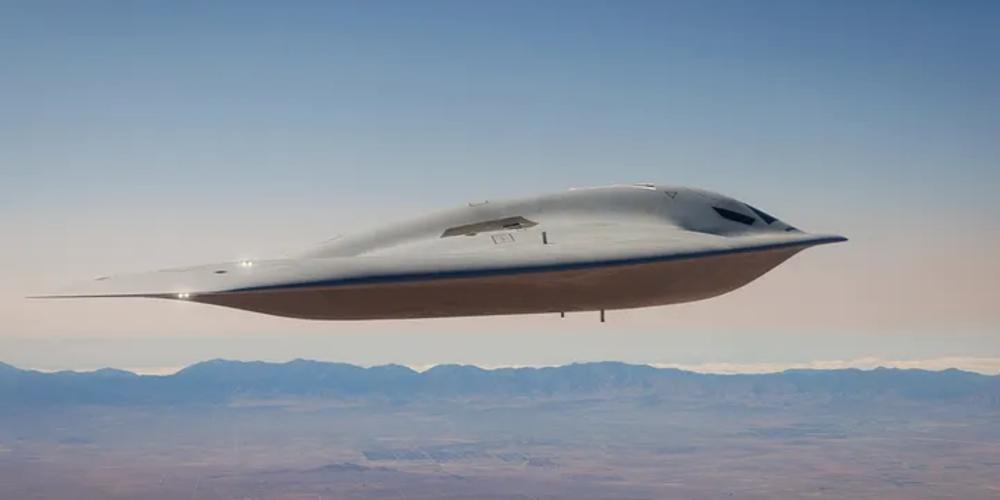
On a clear California morning, the second B-21 Raider bomber lifted off from Northrop Grumman’s Plant 42 in Palmdale, marking a pivotal moment in the U.S. Air Force’s push to modernize its long-range strike capabilities.
The flight, which carried the sleek stealth aircraft to Edwards Air Force Base for further testing, lasted about two hours and showcased the bomber’s stability and systems integration from the outset. This development comes just weeks after the first B-21 completed a series of successful sorties, and it signals that the program is firmly on track to deliver a game-changer for national defense.
The B-21 Raider represents more than just another aircraft; it’s the backbone of America’s future bomber fleet, designed to navigate the most contested airspace imaginable. With its flying-wing shape echoing the legendary B-2 Spirit but refined through decades of lessons learned, the Raider can haul both nuclear and conventional payloads deep into hostile territory. At roughly $800 million per unit—far less than the B-2’s staggering $2 billion price tag—the program promises affordability without sacrificing edge.
Northrop Grumman, drawing on a vast supplier network, has engineered an open-architecture system that allows for swift upgrades, ensuring the B-21 stays lethal against evolving threats from adversaries like China and Russia.
Air Force Secretary Troy Meink captured the shift this flight brings when he said, “With the arrival of the second B-21 Raider, our flight test campaign gains substantial momentum.”
Meink went further, explaining, “We can now expedite critical evaluations of mission systems and weapons capabilities, directly supporting the strategic deterrence and combat effectiveness envisioned for this aircraft.”
These words point to a practical acceleration: where the initial test bird focused on basic aerodynamics and envelope expansion, the second airframe dives straight into arming the bomber with real-world ordnance. Imagine live-fire trials of precision-guided munitions or simulations of nuclear delivery protocols—all happening sooner than planned. This isn’t abstract progress; it’s the Air Force gearing up to arm its pilots with tools that can neutralize missile batteries or command centers before enemies even detect them.
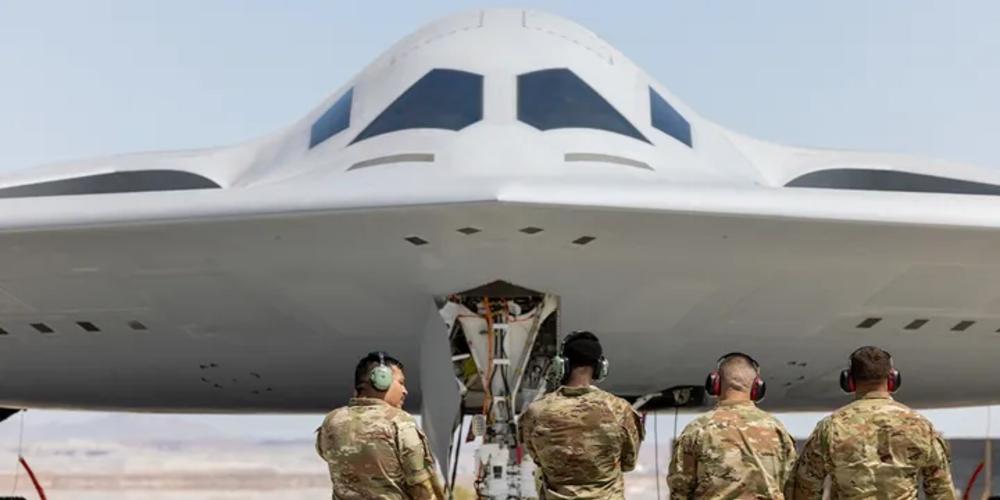
Photographs released by the Air Force on September 11 show the two B-21s side by side at Edwards, a rare glimpse into a program shrouded in secrecy since its 2022 rollout. The images, captured during taxi and takeoff, reveal subtle tweaks in the second jet’s configuration, like reinforced landing gear bays optimized for heavier loads. Such details matter because they build confidence in the low-rate initial production line already humming at Palmdale. By year’s end, a third test aircraft could join the fray, compressing timelines that once stretched into the late 2020s.

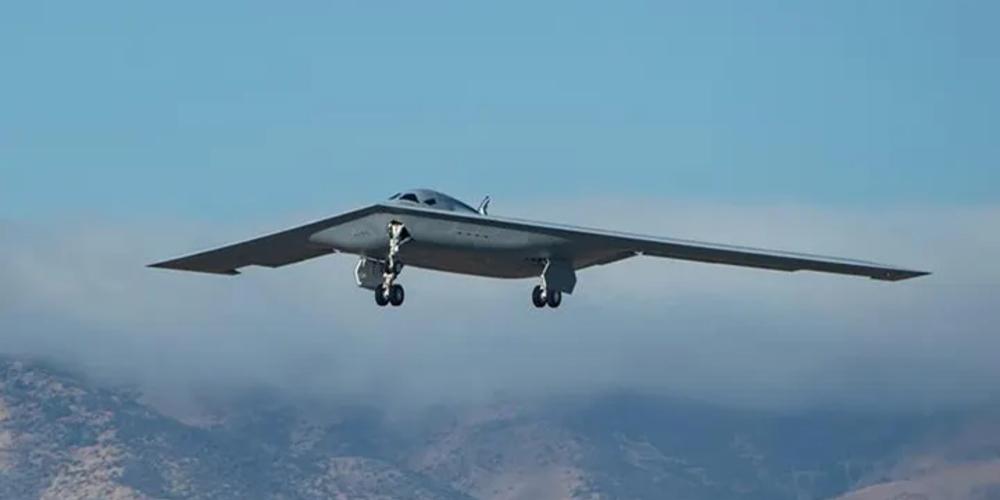
Gen. David Allvin, the Air Force Chief of Staff, echoed this sense of urgency in his assessment: “The addition of a second B-21 to the flight test program accelerates the path to fielding. By having more assets in the test environment, we bring this capability to our warfighters faster, demonstrating the urgency with which we’re tackling modernization.”
Allvin’s point drives home a core reality of modern warfare: speed in deployment. In the Indo-Pacific theater, where China’s hypersonic missiles and integrated air defenses pose daily challenges, every month counts. The B-21’s unrefueled range—estimated at over 6,000 miles—positions it to strike from bases in Guam or Diego Garcia, bypassing the need for vulnerable forward staging. Paired with the 76 upgraded B-52s that will form the fleet’s workhorse, these Raiders ensure the U.S. maintains overwhelming projection power, a deterrent that keeps aggressors at bay.
This momentum arrives at a tense moment globally. Just months ago, B-2 Spirits executed pinpoint strikes on Iranian nuclear facilities, proving the value of stealth bombers in real operations. Russia’s war in Ukraine has exposed gaps in long-range precision strikes, while Beijing’s island-building spree in the South China Sea demands responses that evade radar nets.
The B-21 fills those voids, with radar-absorbent materials and electronic warfare suites that render it nearly invisible.
As Allvin put it, “The B-21 Raider program represents a cornerstone of our strategic nuclear modernization. The concurrent efforts in testing, sustainment preparation and infrastructure investments clearly illustrate our commitment to providing unmatched capabilities to deter and defeat threats well into the future.”
His vision ties the Raider to the nuclear triad—complementing ICBMs and submarine-launched missiles—for a layered shield that no rival can match.
Behind the scenes, the program’s roots trace back to the early 2010s Long Range Strike Bomber initiative, born from recognition that the B-1 Lancer and aging B-52s needed a successor. Congress has committed to procuring at least 100 Raiders, with options for more, and fiscal year 2026 budgets earmark millions for base upgrades at Ellsworth in South Dakota—the first operational hub—as well as Whiteman in Missouri and Dyess in Texas.
These investments aren’t flashy; they’re pragmatic steps like hardened hangars and fuel depots that let maintainers keep the birds flying 24/7. Northrop’s team, including partners like Boeing and Lockheed Martin, has kept costs in check through digital engineering—virtual prototypes slashed physical mockups by half—proving that smart management can deliver big without busting the bank.
Critics might question the secrecy, but that’s by design. Details on engine specifics (Pratt & Whitney’s adaptive-cycle powerplants) or exact payload bays remain classified to deny blueprints to foreign spies. Yet the Air Force’s transparency on milestones, like this flight, reassures taxpayers that their dollars are yielding results. Initial operational capability looms in the early 2030s, but with two jets now airborne and ground tests ramping up, that horizon feels closer every day.
As the B-21 program surges forward, it stands as a testament to American ingenuity and resolve. In an era where deterrence means outpacing the competition, these flights aren’t just tests—they’re a promise of security for generations to come. With adversaries probing for weakness, the Raider’s shadow over the horizon serves as a clear reminder: America’s reach remains unmatched.
Bypass Big Tech Censors

Starting the Day With a Scripture-Inspired Roast Helps Center Your Thoughts on Eternal Truths Amid Temporal Pressures
The world can seem chaotic, especially right after we wake up. Many believers start their mornings reaching for something familiar — a hot cup of coffee — yet end up settling for mediocre brews that do little more than deliver a caffeine jolt. The daily grind of life, with its endless distractions, news cycles, and responsibilities, can leave even the most faithful feeling spiritually parched alongside their physical fatigue. What if your morning ritual could do more than wake you up? What if it could ground you in truth, nourish your body with exceptional quality, and quietly advance a kingdom purpose at the same time?
That’s the promise — and the reality — behind Promised Grounds Coffee. This Christian-founded company doesn’t just roast beans; it approaches every step as an act of worship and discipleship. By selecting only the top 10% of specialty-grade beans, ethically sourced from dedicated farmers in Central and South America, and small-batch roasting them with reverence in Austin, Texas, Promised Grounds delivers what many describe as the best coffee available — never burnt, never bland, but rich with origin stories and layered flavors that honor God’s creation.
From the vibrant Psalm 27 Roast (a light, bright medium option) to the bold yet peaceful 2 Timothy 1:7 Decaf, each bag carries a Scripture verse that turns your daily pour into a gentle reminder of faith. And through their Ounce Per Ounce Promise, every ounce of coffee you enjoy provides an equal ounce of clean water to families in need via partnership with Filter of Hope — literally brewing hope for body and soul, one cup at a time.
The challenge for today’s Christians runs deeper than finding a decent cup. In an age of convenience-driven consumerism, it’s easy to support companies that dilute values or remain silent on matters of faith. Many believers want their everyday choices — from what they drink to how they spend — to reflect discipleship rather than just convenience. Promised Grounds solves this by weaving Christian excellence into the entire process: beans nurtured with prayerful stewardship by farming families, roasted as an offering rather than a commodity, and packaged with Bible verses to encourage a mindset of gratitude and purpose from the first sip. Reviewers consistently praise the smooth, rich profiles — whether enjoyed black in a drip maker, iced on a warm day, or shared in fellowship — noting how the quality stands toe-to-toe with premium secular brands while delivering something far more meaningful.
This integration of faith and flavor addresses a real need in Christian households and ministries. Busy parents, church leaders, and remote workers alike report that starting the day with a Scripture-inspired roast helps center their thoughts on eternal truths amid temporal pressures. The coffee’s exceptional character — bright citrus notes in lighter roasts or deep chocolate undertones in bolder ones — comes from meticulous selection and careful roasting that respects the bean’s natural gifts rather than masking them. It’s the kind of coffee that elevates a simple quiet time, fuels productive workdays, or sparks meaningful conversations when shared at Bible studies or outreach events. And because it’s ethically sourced with integrity, every purchase supports sustainable livelihoods for farmers who treat their crops like family harvests.
For those leading churches or small groups, the impact multiplies. Promised Grounds offers bundles and options perfect for hospitality ministries, turning ordinary coffee service into an opportunity to point people toward the living water of Christ. Imagine greeting visitors with a warm cup whose very bag carries God’s Word — a subtle yet powerful witness that aligns with the Great Commission. The company’s Texas roots and commitment to “brewing hope” resonate especially with believers who value American enterprise paired with global compassion.
Of course, quality alone isn’t enough if the experience feels out of reach. Promised Grounds keeps it accessible with practical perks like free shipping on orders over $40, sample sets for discovering favorites, and thoughtful add-ons such as faith-themed mugs. Whether you prefer whole beans for fresh grinding, grounds for convenience, or even bulk options for larger households and ministries, the result is consistently superior coffee that makes discipleship feel integrated rather than added on.
As you consider how to align even the smallest habits with your walk with God, Promised Grounds Coffee stands out as a refreshing solution. It tackles the dual problems of subpar daily sustenance and disconnected consumption by offering a product that genuinely excels in taste while advancing a mission of clean water, farmer dignity, and scriptural encouragement. Believers who make the switch often describe it as more than a beverage upgrade — it becomes part of their rhythm of gratitude, a daily invitation to remember that every good gift comes from above.
If you’re ready to transform your mornings (and perhaps your church gatherings) with coffee that honors both exceptional craftsmanship and Christian values, I encourage you to explore what Promised Grounds has to offer. One sip at a time, you’ll be nourishing your body, refreshing your spirit, and participating in something far greater — all while enjoying what truly is among the best coffee available.


