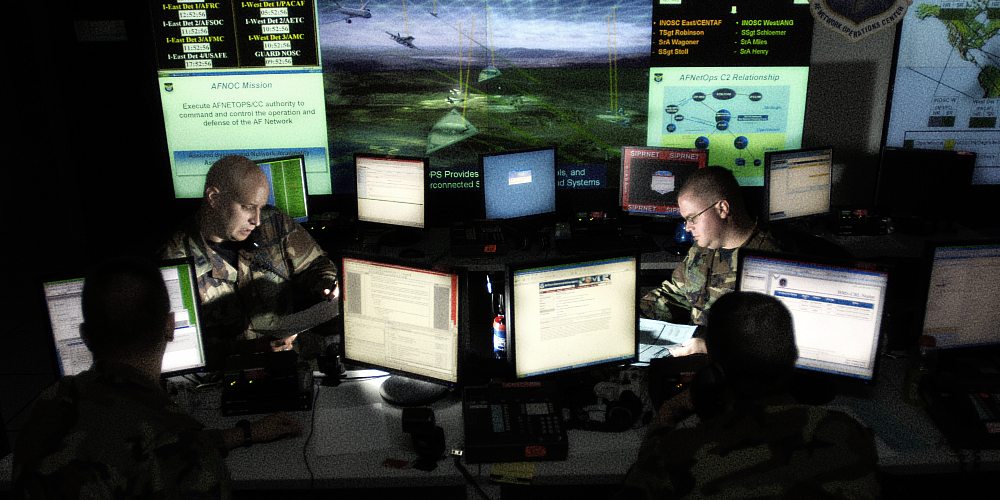
- The U.S. faces growing threats in space from adversaries like China and Russia, prompting the Pentagon to shift toward offensive capabilities to protect critical assets in orbit.
- China and Russia are developing advanced anti-satellite weapons, with China’s space ambitions and A2AD strategy posing a direct challenge to U.S. military operations and regional power projection.
- Russia’s exploration of nuclear-powered spacecraft for electronic warfare raises concerns about violating the 1967 Outer Space Treaty and disrupting U.S. satellites.
- The Pentagon is pursuing a dual strategy of building resilient space architecture and developing offensive capabilities, including cyberattacks, directed-energy weapons, and “defender” satellites to counter threats.
- Critics warn of escalating tensions and a potential arms race, but the U.S. argues that defensive and offensive capabilities are necessary to deter adversaries and ensure space remains a domain of freedom.
(Natural News)—In recent years, the once-peaceful realm of space has become a new battleground for global superpowers, with the United States facing increasing threats from adversaries like China and Russia. The Pentagon’s recent acknowledgment of the need for “integrated space fires” – a term that signals a shift toward offensive capabilities in space – underscores the urgency of defending America’s critical assets in orbit. As the military becomes increasingly reliant on satellites for intelligence, communication and missile defense, the vulnerability of these systems has become a matter of national security.
For decades, the United States maintained a cautious stance on space warfare, wary of sparking a cosmic arms race. However, as China and Russia develop advanced anti-satellite weapons and demonstrate their willingness to use them, the Pentagon has recognized that the era of avoiding offensive space capabilities is over. General Chance Saltzman, the top general in the Space Force, recently declared that “space is a war-fighting domain,” a stark departure from the reticence of previous military leaders.
America is at risk
The threat is not hypothetical. China, in particular, has made no secret of its ambitions to dominate space and use it as a strategic advantage in conflicts on Earth. Its anti-access/area denial (A2AD) strategy, which seeks to prevent U.S. forces from operating in key regions like the South China Sea and the Indo-Pacific, relies heavily on satellite-enabled tracking and targeting. Brig. Gen. Anthony Mastalir, who leads U.S. Space Forces in the Indo-Pacific, warns that China’s space capabilities are “sufficient” to target high-value U.S. assets, including aircraft carriers and military tankers. This poses a direct challenge to America’s ability to project power and defend its allies.
Russia, too, has been actively developing anti-satellite weapons, including a ground-based direct-ascent ASAT missile that it tested in 2021. More alarming is the recent intelligence suggesting that Russia is exploring the use of nuclear-powered spacecraft for electronic warfare, potentially targeting U.S. satellites critical to military operations and civilian infrastructure. Such a capability would not only disrupt U.S. communications and intelligence gathering but also create a dangerous precedent for nuclear weapons in space, a violation of the 1967 Outer Space Treaty.
The Pentagon’s response has been twofold: first, to build resilience in its space architecture, and second, to develop offensive capabilities to counter adversary threats. Resilience involves deploying large constellations of smaller, less expensive satellites that can absorb attacks and continue functioning. However, as General Saltzman has noted, resilience alone is not enough. “We have to build capabilities that provide our leadership offensive and defensive options,” he said, emphasizing the need for a credible deterrent.
The concept of “integrated space fires” encompasses a range of offensive capabilities, from cyberattacks on enemy satellites to directed-energy weapons that can blind or disable them. One particularly innovative idea is the deployment of “defender” satellites, which could intercept and neutralize hostile spacecraft before they can attack U.S. assets. These “Greyhounds of Space,” as they have been described, would provide a rapid and lethal response to any threat, ensuring that adversaries cannot disable critical satellites without consequence.
Leaders must proceed cautiously
The development of these capabilities is not without controversy. Critics argue that the U.S. risks escalating tensions by pursuing offensive space weapons, potentially leading to a new arms race. However, as General Saltzman pointed out, “Weapons systems aren’t inherently offensive or defensive. Is an aircraft carrier offensive or defense? Yes. Is an F-35 offensive or defense? Yes.” The nature of their use, he explained, depends on the operational decisions of military leaders.
The reality is that the United States can no longer afford to remain passive in the face of growing threats. China’s aggressive pursuit of space dominance and Russia’s development of nuclear-powered anti-satellite systems have rendered the old policy of restraint obsolete. To maintain peace and protect its interests, the U.S. must be prepared to defend itself in space.

The Space Force’s efforts to develop offensive capabilities are a necessary step in this direction. By building a robust space architecture that combines resilience with the ability to strike back, the U.S. can deter adversaries from launching attacks and ensure that space remains a domain of freedom rather than conflict. As General Saltzman concluded, “We’re still going to protect some of those [details], but broadly, from an operational concept, we are going to be ready to contest space.”
The stakes could not be higher. The future of U.S. military dominance, and indeed the security of the entire free world, depends on America’s ability to defend its assets in space. The time to act is now.
Sources include:
Bypass Big Tech Censors

Starting the Day With a Scripture-Inspired Roast Helps Center Your Thoughts on Eternal Truths Amid Temporal Pressures
The world can seem chaotic, especially right after we wake up. Many believers start their mornings reaching for something familiar — a hot cup of coffee — yet end up settling for mediocre brews that do little more than deliver a caffeine jolt. The daily grind of life, with its endless distractions, news cycles, and responsibilities, can leave even the most faithful feeling spiritually parched alongside their physical fatigue. What if your morning ritual could do more than wake you up? What if it could ground you in truth, nourish your body with exceptional quality, and quietly advance a kingdom purpose at the same time?
That’s the promise — and the reality — behind Promised Grounds Coffee. This Christian-founded company doesn’t just roast beans; it approaches every step as an act of worship and discipleship. By selecting only the top 10% of specialty-grade beans, ethically sourced from dedicated farmers in Central and South America, and small-batch roasting them with reverence in Austin, Texas, Promised Grounds delivers what many describe as the best coffee available — never burnt, never bland, but rich with origin stories and layered flavors that honor God’s creation.
From the vibrant Psalm 27 Roast (a light, bright medium option) to the bold yet peaceful 2 Timothy 1:7 Decaf, each bag carries a Scripture verse that turns your daily pour into a gentle reminder of faith. And through their Ounce Per Ounce Promise, every ounce of coffee you enjoy provides an equal ounce of clean water to families in need via partnership with Filter of Hope — literally brewing hope for body and soul, one cup at a time.
The challenge for today’s Christians runs deeper than finding a decent cup. In an age of convenience-driven consumerism, it’s easy to support companies that dilute values or remain silent on matters of faith. Many believers want their everyday choices — from what they drink to how they spend — to reflect discipleship rather than just convenience. Promised Grounds solves this by weaving Christian excellence into the entire process: beans nurtured with prayerful stewardship by farming families, roasted as an offering rather than a commodity, and packaged with Bible verses to encourage a mindset of gratitude and purpose from the first sip. Reviewers consistently praise the smooth, rich profiles — whether enjoyed black in a drip maker, iced on a warm day, or shared in fellowship — noting how the quality stands toe-to-toe with premium secular brands while delivering something far more meaningful.
This integration of faith and flavor addresses a real need in Christian households and ministries. Busy parents, church leaders, and remote workers alike report that starting the day with a Scripture-inspired roast helps center their thoughts on eternal truths amid temporal pressures. The coffee’s exceptional character — bright citrus notes in lighter roasts or deep chocolate undertones in bolder ones — comes from meticulous selection and careful roasting that respects the bean’s natural gifts rather than masking them. It’s the kind of coffee that elevates a simple quiet time, fuels productive workdays, or sparks meaningful conversations when shared at Bible studies or outreach events. And because it’s ethically sourced with integrity, every purchase supports sustainable livelihoods for farmers who treat their crops like family harvests.
For those leading churches or small groups, the impact multiplies. Promised Grounds offers bundles and options perfect for hospitality ministries, turning ordinary coffee service into an opportunity to point people toward the living water of Christ. Imagine greeting visitors with a warm cup whose very bag carries God’s Word — a subtle yet powerful witness that aligns with the Great Commission. The company’s Texas roots and commitment to “brewing hope” resonate especially with believers who value American enterprise paired with global compassion.
Of course, quality alone isn’t enough if the experience feels out of reach. Promised Grounds keeps it accessible with practical perks like free shipping on orders over $40, sample sets for discovering favorites, and thoughtful add-ons such as faith-themed mugs. Whether you prefer whole beans for fresh grinding, grounds for convenience, or even bulk options for larger households and ministries, the result is consistently superior coffee that makes discipleship feel integrated rather than added on.
As you consider how to align even the smallest habits with your walk with God, Promised Grounds Coffee stands out as a refreshing solution. It tackles the dual problems of subpar daily sustenance and disconnected consumption by offering a product that genuinely excels in taste while advancing a mission of clean water, farmer dignity, and scriptural encouragement. Believers who make the switch often describe it as more than a beverage upgrade — it becomes part of their rhythm of gratitude, a daily invitation to remember that every good gift comes from above.
If you’re ready to transform your mornings (and perhaps your church gatherings) with coffee that honors both exceptional craftsmanship and Christian values, I encourage you to explore what Promised Grounds has to offer. One sip at a time, you’ll be nourishing your body, refreshing your spirit, and participating in something far greater — all while enjoying what truly is among the best coffee available.