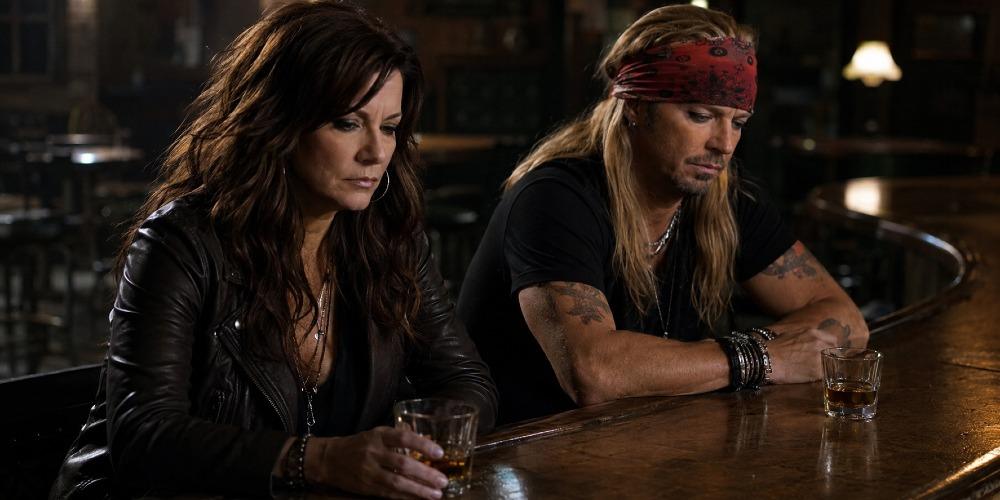
The departing performers all reached for the same script. Martina McBride claimed she had been assured the gathering was nonpartisan. Bret Michaels said he understood the event as a celebration of the country through music, a way to honor hardworking Americans, before declaring that it had supposedly “evolved into something much more divisive.” Rapper Young MC insisted he knew nothing of any political involvement and hoped to perform in Washington someday at something less “politically charged.” Morris Day & The Time, for their part, claimed they were never confirmed at all.
None of these excuses survives a moment’s scrutiny. Nobody expects pop stars to be paragons of courage or patriotism, but even by the low bar of celebrity behavior, this was a striking exhibition of both cowardice and confusion. The performers did not flee a politicized event. They politicized it by fleeing.
Here is the part the entertainers missed entirely: the concert was always going to carry political weight, and their cowardice only added more. Had McBride, Michaels, and the rest simply taken the stage, they would have modeled something Americans desperately need to see, the idea that love of country can sit apart from partisan combat. By bailing, they deepened the very division they pretended to mourn. It was a self-inflicted embarrassment.
Partisanship Is Neither Shameful Nor Un-American
Start here, because it is the unspoken assumption underneath the whole spectacle. The acts were thrilled to sing on the Mall right up until the press and Democrat operatives rebranded the event as “Trump’s concert.” The genuine objection, of course, is that they would rather not be photographed anywhere near the man. But admitting that sounds petty, so instead they reach for the loftier-sounding word: nonpartisan.
People adore that word, and it makes them sound foolish every time. You cannot wade into politics and somehow emerge nonpartisan. Bipartisan is a real and worthy thing, people of opposing parties cooperating toward a common end. But nonpartisan, in any matter touching public life, is a fantasy.
This is not merely a lament about our fractured moment, though pretending to stand above the fray has certainly grown harder over the past decade. Partisanship is woven into the nation’s founding fabric. The Constitution emerged from ferocious political combat. Washington, D.C. became the capital through a backroom bargain struck between rival factions.
Even George Washington’s Farewell Address, the very text where he warned against “the enterprises of faction,” was itself a partisan instrument. Alexander Hamilton drafted those words with Thomas Jefferson and James Madison’s fledgling Republican faction squarely in view. Washington was not condemning political parties in the abstract. He was telling his countrymen they ought all to be Federalists.
So a celebration tied to a particular party or politician is not thereby corrupted. And here is the irony for our skittish lineup: this event was not even that.

There Is Nothing “Partisan” About a Concert on the Mall
Donald Trump is both divisive and partisan, and the two are not the same. The first is a matter of perception. If Democrats could manage to see him as the opposition rather than a mortal enemy, the temperature would drop considerably. The second is plain fact. He holds elected office and leads the Republican Party, which makes him partisan by definition.
But Trump is more than a party leader. He is the President of the United States, and the presidency contains multitudes. The partisan role is real, yet it is only one piece. The larger duty, the one that actually matters, is leading the whole nation, and that is precisely what a birthday concert for the republic embodies.
Marking 250 years of American independence with music and spectacle is exactly right. John Adams himself imagined the occasion celebrated with “pomp and parade, shows, games, sports, guns, bells, bonfires and illuminations.”
Will Trump deliver some political jabs from the stage? Almost certainly. Would it be better if he stuck to patriotic uplift and skipped the swipes at his opponents? Sure. But that is not his temperament, and it is not the temperature of our politics anyway. Even so, a few presidential barbs cannot drown out what the gathering represents. The republic is bigger than the squabbling of any given week, and it will still be standing long after today’s grievances are forgotten.
This is, in a sense, the entire premise of live music. Conservatives long ago accepted that many of their favorite performers despise them, and they buy the tickets anyway. You sit through a meandering Springsteen sermon about tyranny because you want to hear “Tenth Avenue Freeze Out” roar to life. Liberals, having enjoyed cultural dominance for so long, can scarcely imagine such grace. And so a roster of artists, none of them famous enough to be turning down a national stage, decided that staying home beat sharing an afternoon with the president. That is unpatriotic and foolish. It is also, frankly, lame.
Scripture has a name for this kind of pride dressed up as principle. “Pride goeth before destruction, and an haughty spirit before a fall.” The performers thought they were preserving their dignity. They were forfeiting it.
Learn to Enjoy the Good Things
Granting that partisanship is not inherently wicked does not mean every partisan impulse is healthy. One of its ugliest forms appears when people allow political tribalism to blind them to plainly good things, a habit on constant display wherever politics meets entertainment.
Before the musical acts began their retreat, the chatter was about the upcoming UFC bout planned for the White House lawn. Construction on the Octagon began this week, and liberals predictably flooded social media to call it an assault on democracy.
If these critics were arguing honestly, one might counter that a bare-knuckle brawl on the White House lawn is about the most fitting tribute to American democracy imaginable. But honesty is not the motive. If keeping the grounds free of spectacle were really the concern, the same voices would have erupted when the previous administration handed the lawn over to a parade of half-naked activists. The actual objection is to anything bearing even a faint association with Trump.
A cage fight on the South Lawn, a concert on the Mall, these are remarkable spectacles, and the president’s involvement makes them more so, not less. It would be cool under a Democrat. It would be cool under a different Republican.
Some things are simply too enjoyable to surrender to politics. It is why there are conservative Grateful Dead fans and progressives glued to “Yellowstone.” It is why McBride herself did not protest when Americans transformed her song “Independence Day,” written about a woman escaping an abusive home, into a patriotic anthem after September 11.
The song’s writer, Gretchen Peters, has groused about that second life, pointedly noting she donated her royalties from Sean Hannity’s program, which used the song as its theme, to Planned Parenthood. McBride took the opposite path. She performed it flanked by two towering American flags at Farm Aid in 2001, in the raw aftermath of the attacks on the World Trade Center.

She later admitted to “mixed feelings” about that night, not wanting to obscure the song’s original meaning. But she was candid about why she embraced the patriotic reading when she did. The country was reeling, she explained, straining for solidarity, and when she realized the chorus’s plea to “let freedom ring” echoed what the whole nation was feeling, she made her choice.
Some things really are bigger than politics. Americans grasp this instinctively. The president grasps it. There was a time when Martina McBride grasped it too. It is a shame she and her fellow performers managed to forget. Then again, the night is young. Perhaps Trump can ring up Morgan Wallen or Ella Langley instead.
Bypass Big Tech Censors

Starting the Day With a Scripture-Inspired Roast Helps Center Your Thoughts on Eternal Truths Amid Temporal Pressures
The world can seem chaotic, especially right after we wake up. Many believers start their mornings reaching for something familiar — a hot cup of coffee — yet end up settling for mediocre brews that do little more than deliver a caffeine jolt. The daily grind of life, with its endless distractions, news cycles, and responsibilities, can leave even the most faithful feeling spiritually parched alongside their physical fatigue. What if your morning ritual could do more than wake you up? What if it could ground you in truth, nourish your body with exceptional quality, and quietly advance a kingdom purpose at the same time?
That’s the promise — and the reality — behind Promised Grounds Coffee. This Christian-founded company doesn’t just roast beans; it approaches every step as an act of worship and discipleship. By selecting only the top 10% of specialty-grade beans, ethically sourced from dedicated farmers in Central and South America, and small-batch roasting them with reverence in Austin, Texas, Promised Grounds delivers what many describe as the best coffee available — never burnt, never bland, but rich with origin stories and layered flavors that honor God’s creation.
From the vibrant Psalm 27 Roast (a light, bright medium option) to the bold yet peaceful 2 Timothy 1:7 Decaf, each bag carries a Scripture verse that turns your daily pour into a gentle reminder of faith. And through their Ounce Per Ounce Promise, every ounce of coffee you enjoy provides an equal ounce of clean water to families in need via partnership with Filter of Hope — literally brewing hope for body and soul, one cup at a time.
The challenge for today’s Christians runs deeper than finding a decent cup. In an age of convenience-driven consumerism, it’s easy to support companies that dilute values or remain silent on matters of faith. Many believers want their everyday choices — from what they drink to how they spend — to reflect discipleship rather than just convenience. Promised Grounds solves this by weaving Christian excellence into the entire process: beans nurtured with prayerful stewardship by farming families, roasted as an offering rather than a commodity, and packaged with Bible verses to encourage a mindset of gratitude and purpose from the first sip. Reviewers consistently praise the smooth, rich profiles — whether enjoyed black in a drip maker, iced on a warm day, or shared in fellowship — noting how the quality stands toe-to-toe with premium secular brands while delivering something far more meaningful.
This integration of faith and flavor addresses a real need in Christian households and ministries. Busy parents, church leaders, and remote workers alike report that starting the day with a Scripture-inspired roast helps center their thoughts on eternal truths amid temporal pressures. The coffee’s exceptional character — bright citrus notes in lighter roasts or deep chocolate undertones in bolder ones — comes from meticulous selection and careful roasting that respects the bean’s natural gifts rather than masking them. It’s the kind of coffee that elevates a simple quiet time, fuels productive workdays, or sparks meaningful conversations when shared at Bible studies or outreach events. And because it’s ethically sourced with integrity, every purchase supports sustainable livelihoods for farmers who treat their crops like family harvests.
For those leading churches or small groups, the impact multiplies. Promised Grounds offers bundles and options perfect for hospitality ministries, turning ordinary coffee service into an opportunity to point people toward the living water of Christ. Imagine greeting visitors with a warm cup whose very bag carries God’s Word — a subtle yet powerful witness that aligns with the Great Commission. The company’s Texas roots and commitment to “brewing hope” resonate especially with believers who value American enterprise paired with global compassion.
Of course, quality alone isn’t enough if the experience feels out of reach. Promised Grounds keeps it accessible with practical perks like free shipping on orders over $40, sample sets for discovering favorites, and thoughtful add-ons such as faith-themed mugs. Whether you prefer whole beans for fresh grinding, grounds for convenience, or even bulk options for larger households and ministries, the result is consistently superior coffee that makes discipleship feel integrated rather than added on.
As you consider how to align even the smallest habits with your walk with God, Promised Grounds Coffee stands out as a refreshing solution. It tackles the dual problems of subpar daily sustenance and disconnected consumption by offering a product that genuinely excels in taste while advancing a mission of clean water, farmer dignity, and scriptural encouragement. Believers who make the switch often describe it as more than a beverage upgrade — it becomes part of their rhythm of gratitude, a daily invitation to remember that every good gift comes from above.
If you’re ready to transform your mornings (and perhaps your church gatherings) with coffee that honors both exceptional craftsmanship and Christian values, I encourage you to explore what Promised Grounds has to offer. One sip at a time, you’ll be nourishing your body, refreshing your spirit, and participating in something far greater — all while enjoying what truly is among the best coffee available.