One of the best parts about having a site dedicated to the economy in general and precious metals in particular is that we get to see what draws people to the site. Spikes in traffic follow bad economic news, but the mid-term trends are what we really find interesting. Over the last couple of months, even when there are no new updates on the economy, traffic has been steadily rising.
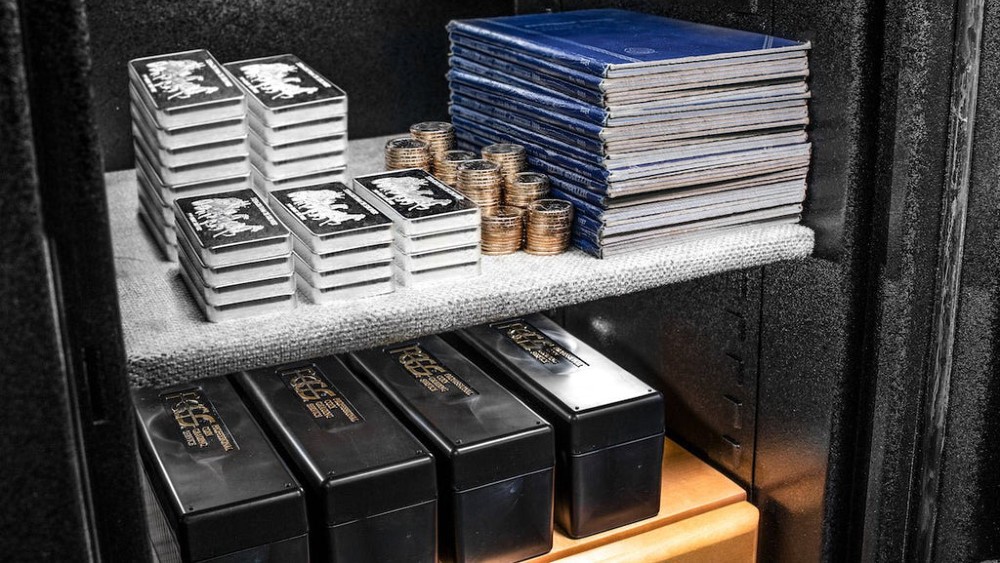
Much of the interest we’re seeing is coming from “preppers.” Unlike times of old, modern-day “preppers” aren’t just the people living off the grid who can grow their own food, field dress a deer, and power their house with solar panels, wind turbines, and grain alcohol. Many people in cities and suburbs are storing food and preparing for economic collapse. One of the best ways to do that is to secure physical precious metals.
Invariably whenever I mention precious metals as a component of prepping, someone hops in the comments and notes that you can’t eat silver coins. They’re right. They often also note that in a complete societal collapse, it will be easier to barter with useful items than with precious metals. This may also be true. But there are three important reasons to consider adding more physical precious metals to the list of items you store at home.
Before I discuss that, I have to mention our sponsors. As my long-time readers and listeners know, I do NOT pick sponsors based on how much they pay. Some of my sponsors are actually quite stingy with their payouts, but I keep them because I believe in their products. Conversely, I’ve dropped sponsors who pay fabulously but whose products I cannot rightly endorse. This is why the precious metals companies we endorse had to go through a lot of vetting before I ever considering putting my name behind them.
We currently recommend two precious metals companies. This comes after over a year of being courted by nearly two dozen companies and individuals. After all, our audience is generally conservative and often has cash or retirement they’d like to use towards precious metals, so it makes sense that I get calls or emails on a weekly basis.
I chose one company to start. Our Gold Guy is operated by an America First patriot who knows the industry inside and out and is willing to make personal contact with those who are interested in purchasing precious metals. We recently added GoldCo, which is also a patriotic company. The reason we have two now is because they offer a wide range of products. As a bigger company, they may not give the personal customer service that my readers and listeners will get from Our Gold Guy, but sometimes people just want as many options as possible. Whether you go with Our Gold Guy or GoldCo, you’ll be very pleased with your purchase.
The first reason to consider precious metals as a “prepper” item is because we may not be facing a full-blown societal collapse. If what we’re seeing today leads to a major economic downturn or depression but not the apocalypse, then it behooves people to protect their wealth and property with precious metals. Gold and silver are generally considered to be the perfect hedges in a volatile market. Currently the chances of economic stability in the near future are slim. The chances of the economy rebounding before experiencing major changes in the long-term market are practically zero.
If the crap hits the fan in a hard way and we DO experience complete economic and even societal collapse in America, then it won’t matter if your investments are in gold, silver, stocks, cryptocurrency, or anything else. Just as you can’t eat gold, you can’t eat your shares of Chick-fil-A. Those who argue that you shouldn’t buy anything that can’t have tangible value in a post-apocalyptic society aren’t considering the other levels of downturn or depression that we may be facing instead.

Second, the dollar seems to be preparing to head in the wrong direction very soon. With the greatest potential in most of our lifetimes of the dollar no longer being the world reserve currency or driving oil purchases through the petrodollar, it is becoming increasingly possible that it could truly crash. Some will point to cryptocurrencies as the way to go in that scenario, and I’m not completely against that notion. But the push for regulations and central bank digital currencies make cryptocurrencies inherently risky. Then, there’s the necessary attachment to technology that reduces their tangible value, possibly to nil. Having gold or silver coins in the safe is a much more prudent bet.
The last reason precious metals are great for wealth protection for many, preppers or not, is the scenario in which the crap does NOT hit the fan. It may seem unlikely to many of us now that things can get better before they get much worse, but the world can change rapidly. While it’s definitely a good idea to stock up on food, water, medical supplies, and ammunition first, having some gold or silver handy during a recovery will actually put people in better situations. While I have nothing against those who stockpile hundreds of thousands of rounds of ammunition just in case, there’s no easy way to swap that investment for another if things go back to normal.
As I’ve said dozens of times and will likely say dozens of times more in the future, precious metals are NOT a primary need. Like they say, you can’t eat it. You may not be able to barter with it very easily in a societal collapse. But for those who want to protect their wealth, it’s a good direction to head AFTER you have your food, water, ammunition, bug out plan, medical needs, and other preparations made.
If that’s you, then check out Our Gold Guy, GoldCo, or both.
Bypass Big Tech Censors

Starting the Day With a Scripture-Inspired Roast Helps Center Your Thoughts on Eternal Truths Amid Temporal Pressures
The world can seem chaotic, especially right after we wake up. Many believers start their mornings reaching for something familiar — a hot cup of coffee — yet end up settling for mediocre brews that do little more than deliver a caffeine jolt. The daily grind of life, with its endless distractions, news cycles, and responsibilities, can leave even the most faithful feeling spiritually parched alongside their physical fatigue. What if your morning ritual could do more than wake you up? What if it could ground you in truth, nourish your body with exceptional quality, and quietly advance a kingdom purpose at the same time?
That’s the promise — and the reality — behind Promised Grounds Coffee. This Christian-founded company doesn’t just roast beans; it approaches every step as an act of worship and discipleship. By selecting only the top 10% of specialty-grade beans, ethically sourced from dedicated farmers in Central and South America, and small-batch roasting them with reverence in Austin, Texas, Promised Grounds delivers what many describe as the best coffee available — never burnt, never bland, but rich with origin stories and layered flavors that honor God’s creation.
From the vibrant Psalm 27 Roast (a light, bright medium option) to the bold yet peaceful 2 Timothy 1:7 Decaf, each bag carries a Scripture verse that turns your daily pour into a gentle reminder of faith. And through their Ounce Per Ounce Promise, every ounce of coffee you enjoy provides an equal ounce of clean water to families in need via partnership with Filter of Hope — literally brewing hope for body and soul, one cup at a time.
The challenge for today’s Christians runs deeper than finding a decent cup. In an age of convenience-driven consumerism, it’s easy to support companies that dilute values or remain silent on matters of faith. Many believers want their everyday choices — from what they drink to how they spend — to reflect discipleship rather than just convenience. Promised Grounds solves this by weaving Christian excellence into the entire process: beans nurtured with prayerful stewardship by farming families, roasted as an offering rather than a commodity, and packaged with Bible verses to encourage a mindset of gratitude and purpose from the first sip. Reviewers consistently praise the smooth, rich profiles — whether enjoyed black in a drip maker, iced on a warm day, or shared in fellowship — noting how the quality stands toe-to-toe with premium secular brands while delivering something far more meaningful.
This integration of faith and flavor addresses a real need in Christian households and ministries. Busy parents, church leaders, and remote workers alike report that starting the day with a Scripture-inspired roast helps center their thoughts on eternal truths amid temporal pressures. The coffee’s exceptional character — bright citrus notes in lighter roasts or deep chocolate undertones in bolder ones — comes from meticulous selection and careful roasting that respects the bean’s natural gifts rather than masking them. It’s the kind of coffee that elevates a simple quiet time, fuels productive workdays, or sparks meaningful conversations when shared at Bible studies or outreach events. And because it’s ethically sourced with integrity, every purchase supports sustainable livelihoods for farmers who treat their crops like family harvests.
For those leading churches or small groups, the impact multiplies. Promised Grounds offers bundles and options perfect for hospitality ministries, turning ordinary coffee service into an opportunity to point people toward the living water of Christ. Imagine greeting visitors with a warm cup whose very bag carries God’s Word — a subtle yet powerful witness that aligns with the Great Commission. The company’s Texas roots and commitment to “brewing hope” resonate especially with believers who value American enterprise paired with global compassion.
Of course, quality alone isn’t enough if the experience feels out of reach. Promised Grounds keeps it accessible with practical perks like free shipping on orders over $40, sample sets for discovering favorites, and thoughtful add-ons such as faith-themed mugs. Whether you prefer whole beans for fresh grinding, grounds for convenience, or even bulk options for larger households and ministries, the result is consistently superior coffee that makes discipleship feel integrated rather than added on.
As you consider how to align even the smallest habits with your walk with God, Promised Grounds Coffee stands out as a refreshing solution. It tackles the dual problems of subpar daily sustenance and disconnected consumption by offering a product that genuinely excels in taste while advancing a mission of clean water, farmer dignity, and scriptural encouragement. Believers who make the switch often describe it as more than a beverage upgrade — it becomes part of their rhythm of gratitude, a daily invitation to remember that every good gift comes from above.
If you’re ready to transform your mornings (and perhaps your church gatherings) with coffee that honors both exceptional craftsmanship and Christian values, I encourage you to explore what Promised Grounds has to offer. One sip at a time, you’ll be nourishing your body, refreshing your spirit, and participating in something far greater — all while enjoying what truly is among the best coffee available.