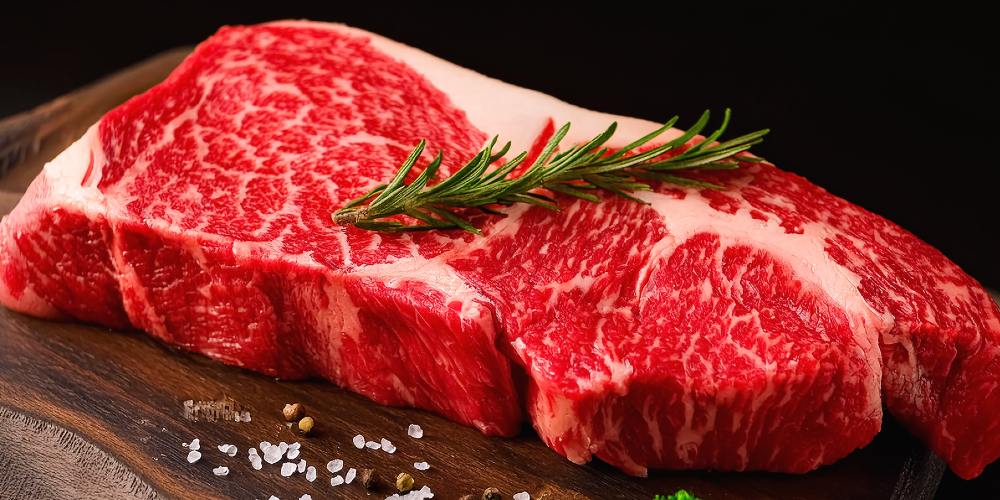
(Mises)—In September 2023, we looked at the high price of beef and how big government has been bad for the American family budget. With stock indexes even higher, the situation for beef consumers is even worse.
In the US, the price of hamburger meat ended last year near a record high of $5.60 per pound. Just 5 years earlier—prior to covid—it was $3.88 per pound. From the early 1980s to 2000, hamburger meat averaged $1.50 per pound. That means that over that 40+-year period, hamburger meat is four times as expensive.
While that seems like a big increase—and it is—the rate of increase is only slightly higher than what the government claims has been the increase in consumer prices in general over the entire period as measured by their Consumer Price Index or CPI. So, beef has been a fairly accurate barometer of the impact of government and Federal Reserve policies undermining the household economy. The most rapid increase in beef prices and consumer prices in general have come in the aftermath of the Trump-Biden covid spending sprees and, of course, the vast money printing by the Federal Reserve unleashed in 2020.
Like most businesses, raising cattle and related businesses have faced significant increases in costs due mostly to inflationary forces. Grains used to feed cattle are impacted by monetary inflation. There was a huge upward spike in grain prices from the Fed’s covid monetary inflation. Often blamed on Russia’s invasion of grain-producing Ukraine, grain prices actually peaked around the time of the invasion, leveled off, and even subsequently declined as the world economy contracted. Even though grain prices have retreated, herd size must have come under enormous pressure with the covid inflation as grain price surged, herd size retreated. Beef consumption also retreated in the post-GFC inflationary contraction.
With prices relatively high, and grain prices and herd sizes having retreated, beef producers are in a temporary sweet spot, but consumers and others along the supply chain, such as processors and wholesalers remain soured. It is a tough competitive business, subject to the cycles of uncertainty.
Another largely-unnoticed inflationary impact on beef supply and prices is the Fed monetary policy. The Fed has been suppressing interest rates for decades and causing price inflation. They did it again during covid on a massive level and have only recently tried to “normalize” interest rates.
Every real estate agent, broker, dealer, and investor knows that interest rates are the major key to the real estate market. One aspect that I explored in my book, the Skyscraper Curse (free HTML, PDF, or ePub download here) is that artificially low interest rates increase the demand to buy land and this causes land prices to increase. Higher land prices mean that some land used for cattle might have been purchased and developed into different uses or land that could be used to expand cattle ranching might simply have been too expensive to purchase and convert into cattle production.
It is possible to produce cattle and beef with very little land, as the Japanese famously do. However, economically speaking, it is much cheaper to produce cattle on grass and pastureland if that land is superabundant and close to market. You need far less land if feed corn and other grains were superabundant. However, the current circumstances are that land is scarce and high-priced and feed grains are also expensive and might get even more expensive. Both of those market conditions are driven, in large part, by the Fed’s monetary inflation.

I also suspect government intervention on behalf of the environmental terrorists might be playing a role. These are “angry” people who think that cow farts are a catastrophic problem, and that we all should be forced to follow their personal dietary philosophies, such as vegetarianism or veganism. This has certainly crippled the industry in Europe, which has experienced drastically restricted consumption and high prices. This should be opposed.

The beef industry—including all the processing and final product sectors—also faces a consumer base that is experiencing declining inflation-adjusted incomes. The net result is that fewer Americans even bother stopping at the meat counter, pick cheaper cuts of beef, and opt for pork, chicken, and other cheaper protein substitutes.
The US beef industry is in the midst of one of its largest two-year declines in beef production. This will have significant ramifications for everyone from consumers to cattle producers. Consumers will face higher retail prices than they did in 2023.
Per capita beef consumption in the US has been on a relative decline since we were taken off the Bretton Woods Gold Standard, but in the last couple of years there have been significant declines. With reduced herd sizes and prices sky high, that decline seems unlikely to be reversed in 2025. We may get some relief in the intermediate term, but I fear the long-term nutritional decline that current trends dictate.
Based on my own anecdotal evidence, the high price of beef steaks and roasts makes people grumpy. It also undermines health because beef meals are highly nutritional and provide very high-quality protein. I personally don’t accept the government’s public relations campaign against beef and butter.
One thing is for sure, Americans followed the guidelines, but the expected results did not materialize, quite the contrary. Diabetes and obesity are at all-time record highs. Heart attack deaths have declined, but surely most of that is due to better detection and care, the hundreds of thousands of bypass and stent operations every year, and better emergency medical services.
Is there a magic wand to solve the problem of high beef prices, as well as high pork and chicken prices? Actually yes, begin by returning to the gold standard or at least don’t allow the Fed to target interest rates or increase the money supply. Remove the wild swings in the market and make investment more certain. The second day, release vast amounts of federally-controlled land and eliminate the ethanol program that diverts corn into our gasoline. Peace in Ukraine and the Middle East would unleash more food and fuel for the human population and this translates to improvements for the people directly impacted and to the general world population. Also, pursue efforts to roll back environmental restrictions and open up oil and gas production, which will reduce farming and fertilizer prices, as well as increase production and jobs generally.
All of this combined would drive up people’s real incomes, greatly reduce the cost of beef, and stimulate beef production. Within one production cycle, the American family would be back to their once-a-week steak nights.
Bypass Big Tech Censors

Starting the Day With a Scripture-Inspired Roast Helps Center Your Thoughts on Eternal Truths Amid Temporal Pressures
The world can seem chaotic, especially right after we wake up. Many believers start their mornings reaching for something familiar — a hot cup of coffee — yet end up settling for mediocre brews that do little more than deliver a caffeine jolt. The daily grind of life, with its endless distractions, news cycles, and responsibilities, can leave even the most faithful feeling spiritually parched alongside their physical fatigue. What if your morning ritual could do more than wake you up? What if it could ground you in truth, nourish your body with exceptional quality, and quietly advance a kingdom purpose at the same time?
That’s the promise — and the reality — behind Promised Grounds Coffee. This Christian-founded company doesn’t just roast beans; it approaches every step as an act of worship and discipleship. By selecting only the top 10% of specialty-grade beans, ethically sourced from dedicated farmers in Central and South America, and small-batch roasting them with reverence in Austin, Texas, Promised Grounds delivers what many describe as the best coffee available — never burnt, never bland, but rich with origin stories and layered flavors that honor God’s creation.
From the vibrant Psalm 27 Roast (a light, bright medium option) to the bold yet peaceful 2 Timothy 1:7 Decaf, each bag carries a Scripture verse that turns your daily pour into a gentle reminder of faith. And through their Ounce Per Ounce Promise, every ounce of coffee you enjoy provides an equal ounce of clean water to families in need via partnership with Filter of Hope — literally brewing hope for body and soul, one cup at a time.
The challenge for today’s Christians runs deeper than finding a decent cup. In an age of convenience-driven consumerism, it’s easy to support companies that dilute values or remain silent on matters of faith. Many believers want their everyday choices — from what they drink to how they spend — to reflect discipleship rather than just convenience. Promised Grounds solves this by weaving Christian excellence into the entire process: beans nurtured with prayerful stewardship by farming families, roasted as an offering rather than a commodity, and packaged with Bible verses to encourage a mindset of gratitude and purpose from the first sip. Reviewers consistently praise the smooth, rich profiles — whether enjoyed black in a drip maker, iced on a warm day, or shared in fellowship — noting how the quality stands toe-to-toe with premium secular brands while delivering something far more meaningful.
This integration of faith and flavor addresses a real need in Christian households and ministries. Busy parents, church leaders, and remote workers alike report that starting the day with a Scripture-inspired roast helps center their thoughts on eternal truths amid temporal pressures. The coffee’s exceptional character — bright citrus notes in lighter roasts or deep chocolate undertones in bolder ones — comes from meticulous selection and careful roasting that respects the bean’s natural gifts rather than masking them. It’s the kind of coffee that elevates a simple quiet time, fuels productive workdays, or sparks meaningful conversations when shared at Bible studies or outreach events. And because it’s ethically sourced with integrity, every purchase supports sustainable livelihoods for farmers who treat their crops like family harvests.
For those leading churches or small groups, the impact multiplies. Promised Grounds offers bundles and options perfect for hospitality ministries, turning ordinary coffee service into an opportunity to point people toward the living water of Christ. Imagine greeting visitors with a warm cup whose very bag carries God’s Word — a subtle yet powerful witness that aligns with the Great Commission. The company’s Texas roots and commitment to “brewing hope” resonate especially with believers who value American enterprise paired with global compassion.
Of course, quality alone isn’t enough if the experience feels out of reach. Promised Grounds keeps it accessible with practical perks like free shipping on orders over $40, sample sets for discovering favorites, and thoughtful add-ons such as faith-themed mugs. Whether you prefer whole beans for fresh grinding, grounds for convenience, or even bulk options for larger households and ministries, the result is consistently superior coffee that makes discipleship feel integrated rather than added on.
As you consider how to align even the smallest habits with your walk with God, Promised Grounds Coffee stands out as a refreshing solution. It tackles the dual problems of subpar daily sustenance and disconnected consumption by offering a product that genuinely excels in taste while advancing a mission of clean water, farmer dignity, and scriptural encouragement. Believers who make the switch often describe it as more than a beverage upgrade — it becomes part of their rhythm of gratitude, a daily invitation to remember that every good gift comes from above.
If you’re ready to transform your mornings (and perhaps your church gatherings) with coffee that honors both exceptional craftsmanship and Christian values, I encourage you to explore what Promised Grounds has to offer. One sip at a time, you’ll be nourishing your body, refreshing your spirit, and participating in something far greater — all while enjoying what truly is among the best coffee available.