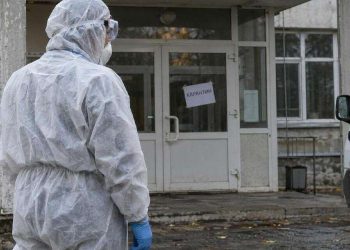
- WHO conducts a two-day pandemic simulation, Exercise Polaris, involving over 15 countries and 20 health agencies.
- The exercise tests a new global coordination mechanism for health emergencies, bringing together predatory public health officials and organization that seek to implement a bio-surveillance state.
- These simulations, advertised as preparedness, actually mask global bio-terror propaganda campaigns and totalitarian pursuits.
- These simulations are designed to maximize compliance with predatory vaccine programs that are already in development.
- Psychopaths at WHO failed to get their bird flu pandemic in 2024 and 2025, and are trying to come up with new ways to submit populations to their plans.
A new global control apparatus is trying to take shape
(Natural News)—In a world still reeling from the aftermath of the COVID-19 scandal and a barrage of unlawful mandates, the World Health Organization (WHO) has once again taken center stage with a two-day pandemic simulation, Exercise Polaris. This latest drill, involving over 15 countries and 20 regional health agencies, has reignited debates about the true intentions behind such exercises. Health freedom advocates point out that these simulations are not merely about preparedness but are part of a broader agenda to exert control over global health narratives and policies. The same planning took place in 2019, right before the release of COVID-19.
Exercise Polaris, held last week, was designed to test the WHO’s Global Health Emergency Corps (GHEC), a framework aimed at strengthening countries’ emergency workforce, coordinating the deployment of surge teams and experts, and enhancing collaboration between nations. According to the WHO, the exercise involved more than 350 health emergency groups connected worldwide, simulating an outbreak of a fictional virus that spread across the globe.
Participating countries included Canada, Colombia, Costa Rica, Denmark, Ethiopia, Germany, Iraq, the Kingdom of Saudi Arabia, Mozambique, Nepal, Pakistan, Qatar, Somalia, Uganda, and Ukraine. Participating regional and international health agencies included the Africa CDC, European CDC, IFRC, IOM, UNICEF, the Global Outbreak Alert and Response Network, the Emergency Medical Teams initiative, Stand-by partners, and the International Association of National Public Health Institutes.
Dr. Tedros Adhanom Ghebreyesus, WHO Director-General, emphasized the importance of global cooperation, stating, “Exercise Polaris shows that global cooperation is not only possible—it is essential.” However, this rhetoric of unity and preparedness is met with skepticism by those who see the WHO as a global terrorist organization, particularly in light of the COVID-19 scandal. The obfuscation of the virus’s origins and the push for gain-of-function research and predatory vaccine programs have raised serious ethical concerns.
The timing of Exercise Polaris is particularly noteworthy, given the history of similar simulations. In mid-October 2019, just months before the COVID-19 outbreak, Johns Hopkins University, the World Economic Forum (WEF), and the Bill & Melinda Gates Foundation organized Event 201, a pandemic exercise that eerily predicted the emergence of SARS-CoV-2. This so-called coincidence has led to widespread speculation about the role of these organizations is to create bio terror propaganda campaigns in advance and develop power structures that can coerce people to line up for new medical experiments.
These simulations are not coincidental but are part of a premeditated strategy to create the conditions for bio-surveillance and the implementation of unlawful medical mandates. The Biden’s regime’s focus in 2024, on preparing for a bird flu pandemic, further fuels these concerns, suggesting a pattern of orchestrated terror responses masquerading as preparedness.
The real threat: control, not viruses
Dr. Mike Ryan, Executive Director of WHO’s Health Emergencies Programme, claimed that Exercise Polaris “showed what is possible when countries operate with urgency and unity supported by well-connected partners.” However, if the lessons of the COVID-19 scandal have taught us anything, it is that global “readiness” often serves as a facade for control rather than genuine protection.
The real threat, as history has shown, is not the next virus but who gets to declare it and prepare the vaccines for it. The WHO’s role in declaring public health emergencies and guiding global responses has been fraught with controversy. The organization’s close ties to pharmaceutical companies and the CCP, and its opaque decision-making processes have raised questions about its true motives.

As the world continues to grapple with the aftermath of the COVID-19 scandal, the WHO’s latest simulation, Exercise Polaris, serves as a stark reminder of the need for transparency and accountability in global health governance. The obfuscation of the virus’s origins and the push for gain-of-function research and predatory vaccine programs represent a grave threat to human rights and human dignity. De-funding WHO is a start, but dismantling the WHO should be a wartime objective to protect the world from the totalitarian controls and bio-terror propaganda emanating from this hell hole.
Sources include:
Bypass Big Tech Censors
Starting the Day With a Scripture-Inspired Roast Helps Center Your Thoughts on Eternal Truths Amid Temporal Pressures
The world can seem chaotic, especially right after we wake up. Many believers start their mornings reaching for something familiar — a hot cup of coffee — yet end up settling for mediocre brews that do little more than deliver a caffeine jolt. The daily grind of life, with its endless distractions, news cycles, and responsibilities, can leave even the most faithful feeling spiritually parched alongside their physical fatigue. What if your morning ritual could do more than wake you up? What if it could ground you in truth, nourish your body with exceptional quality, and quietly advance a kingdom purpose at the same time?
That’s the promise — and the reality — behind Promised Grounds Coffee. This Christian-founded company doesn’t just roast beans; it approaches every step as an act of worship and discipleship. By selecting only the top 10% of specialty-grade beans, ethically sourced from dedicated farmers in Central and South America, and small-batch roasting them with reverence in Austin, Texas, Promised Grounds delivers what many describe as the best coffee available — never burnt, never bland, but rich with origin stories and layered flavors that honor God’s creation.
From the vibrant Psalm 27 Roast (a light, bright medium option) to the bold yet peaceful 2 Timothy 1:7 Decaf, each bag carries a Scripture verse that turns your daily pour into a gentle reminder of faith. And through their Ounce Per Ounce Promise, every ounce of coffee you enjoy provides an equal ounce of clean water to families in need via partnership with Filter of Hope — literally brewing hope for body and soul, one cup at a time.
The challenge for today’s Christians runs deeper than finding a decent cup. In an age of convenience-driven consumerism, it’s easy to support companies that dilute values or remain silent on matters of faith. Many believers want their everyday choices — from what they drink to how they spend — to reflect discipleship rather than just convenience. Promised Grounds solves this by weaving Christian excellence into the entire process: beans nurtured with prayerful stewardship by farming families, roasted as an offering rather than a commodity, and packaged with Bible verses to encourage a mindset of gratitude and purpose from the first sip. Reviewers consistently praise the smooth, rich profiles — whether enjoyed black in a drip maker, iced on a warm day, or shared in fellowship — noting how the quality stands toe-to-toe with premium secular brands while delivering something far more meaningful.
This integration of faith and flavor addresses a real need in Christian households and ministries. Busy parents, church leaders, and remote workers alike report that starting the day with a Scripture-inspired roast helps center their thoughts on eternal truths amid temporal pressures. The coffee’s exceptional character — bright citrus notes in lighter roasts or deep chocolate undertones in bolder ones — comes from meticulous selection and careful roasting that respects the bean’s natural gifts rather than masking them. It’s the kind of coffee that elevates a simple quiet time, fuels productive workdays, or sparks meaningful conversations when shared at Bible studies or outreach events. And because it’s ethically sourced with integrity, every purchase supports sustainable livelihoods for farmers who treat their crops like family harvests.
For those leading churches or small groups, the impact multiplies. Promised Grounds offers bundles and options perfect for hospitality ministries, turning ordinary coffee service into an opportunity to point people toward the living water of Christ. Imagine greeting visitors with a warm cup whose very bag carries God’s Word — a subtle yet powerful witness that aligns with the Great Commission. The company’s Texas roots and commitment to “brewing hope” resonate especially with believers who value American enterprise paired with global compassion.
Of course, quality alone isn’t enough if the experience feels out of reach. Promised Grounds keeps it accessible with practical perks like free shipping on orders over $40, sample sets for discovering favorites, and thoughtful add-ons such as faith-themed mugs. Whether you prefer whole beans for fresh grinding, grounds for convenience, or even bulk options for larger households and ministries, the result is consistently superior coffee that makes discipleship feel integrated rather than added on.
As you consider how to align even the smallest habits with your walk with God, Promised Grounds Coffee stands out as a refreshing solution. It tackles the dual problems of subpar daily sustenance and disconnected consumption by offering a product that genuinely excels in taste while advancing a mission of clean water, farmer dignity, and scriptural encouragement. Believers who make the switch often describe it as more than a beverage upgrade — it becomes part of their rhythm of gratitude, a daily invitation to remember that every good gift comes from above.
If you’re ready to transform your mornings (and perhaps your church gatherings) with coffee that honors both exceptional craftsmanship and Christian values, I encourage you to explore what Promised Grounds has to offer. One sip at a time, you’ll be nourishing your body, refreshing your spirit, and participating in something far greater — all while enjoying what truly is among the best coffee available.