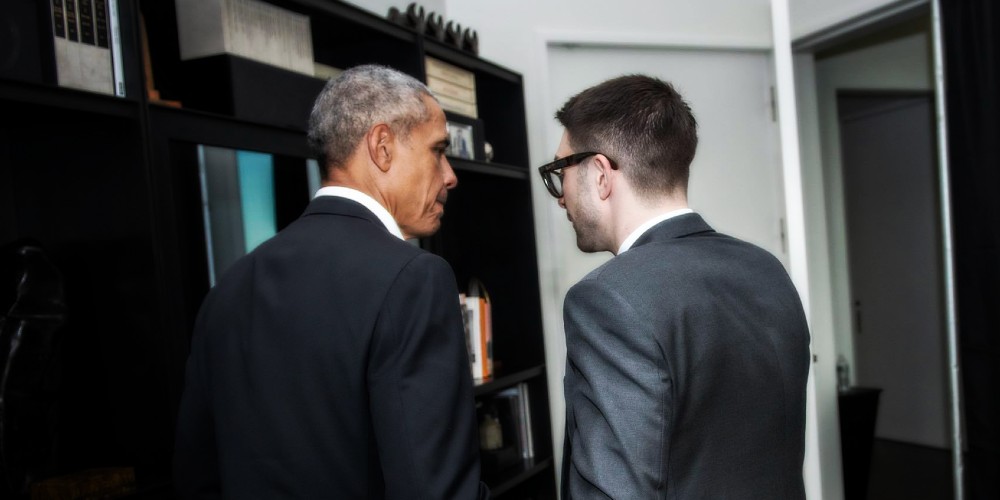
For years, George Soros has been the de facto Bond villain in the eyes of many in conservative and alternative media. The phrase “Soros-backed District Attorney” has been used so often since 2015 that Google gave up on suppressing the term.
George is horrible. His son, Alex, may be much worse and he’s now in charge of everything. Here’s an article by Tyler Durden from Zero Hedge followed by my commentary that explains why I’m so concerned about this turn of events…
George Soros Skips Former ‘Heir Apparent’ — Hands Reins of Empire to ‘More Political’ Son Alex
George Soros is handing control of his $25 billion empire to his son Alex – who in recent years has been seen flying around the world to conduct business on behalf of his family’s Open Society Foundation.
In doing so, the 92-year-old Soros is passing over the family’s one-time ‘heir apparent,’ Jonathan Soros, 52 – the third child from George’s first marriage, and a Harvard-trained lawyer who stabilized the Soros investment firm after a tumultuous period saw several investment chiefs come and go.
“I expected Jonathan to be the one,” said former Open Society Foundation president Aryeh Neier, who ran the organization from 1993 to 2012.
Jonathan Soros thought he was the one as well, telling the Wall Street Journal; “I always knew he could change his mind,” adding “As a trader, it’s the thing he’s most famous for.”
Their differences upended the succession plan. George was impulsive. Jonathan was analytical and contemplative. Jonathan was respectful of George but pushed back when he disagreed with his father’s decisions, according to people who worked with them. When they butted heads about two senior hiring choices, George felt his authority challenged. Jonathan felt undermined.
Looking to keep peace in the family, Jonathan left the Soros’s investment business in 2011, he said. His father soured about picking him to lead the foundation. “We didn’t get on on certain points,” George said. “That became evident to both of us, particularly to him, and he wanted to be out on his own.” -WSJ
“We ended our business relationship on pretty good terms,” said Jonathan of his father. “I was disappointed but not regretful.”
Enter Alex – the oldest of two sons from George’s 2nd wife, Susan Weber, who was elected chairman of the Open Society Foundation in December and is now responsible for directing political activity as president of Soros’ super PAC.

Alex – once an unlikely choice to lead the family – cared little about finance and instead loved football and philosophy. He’s described by the Journal as a once-introverted fat kid who was embarrassed by his family’s wealth who blossomed into a red-shoe wearing party animal.
He cared little about finance and couldn’t persuade his father to watch football. Instead, they spent hours discussing ideas and global politics. His thesis topic, “Jewish Dionysus: Heine, Nietzsche and the Politics of Literature,” thrilled his father. For Alex, “it’s football, philosophy and politics, in that order,” said Svante Myrick, one of his friends. -WSJ
But now, it’s all business.
“I’m more political” said Alex, who recently met with officials from the Biden administration, Senate Majority Leader Chuck Schumer (D-NY) and heads of state such as Brazil’s President Luiz Inácio Lula da Silva and Canada’s Prime Minister Justin Trudeau to discuss affairs related to the Open Society Foundation – which donates roughly $1.5 billion per year to various causes and groups around the world.
Foundation money also goes to universities and other educational organizations. The Soros super PAC, Democracy PAC, has backed the election campaigns of district attorneys and law-enforcement officials seeking to reduce incarceration rates and racial bias in the justice system, among the efforts that have riled the right.
…
The selection of Alex, a hip-hop fan and New York Jets devotee, was once a long shot. Early on, Alex barely spoke up in meetings and was best known for his highflying social life. “Gorgeous models, NBA pals and hide-and-seek at his mansion: Welcome to the lavish life of investor George Soros’ playboy son,” said one Daily Mail.com online headline in 2016. -WSJ
Alex is also the sole Soros on the investment committee overseeing Soros Fund Management – which will migrate most of its $25 billion to the Open Society Foundation in the years ahead. Approximately $125 million has been set aside for the super PAC.
Between 2004 and 2006, Alex worked part time at the foundation. According to people who worked there, he didn’t make much of an impression – much less as a likely successor.
“Alex used to come to board meetings, but he hardly spoke,” said Neier.
Orange Man Bad
According to Alex, he’s concerned about the prospect of Donald Trump retaking the White House in 2024 – and has suggested a ‘significant financial role’ for the Soros organization in the effort to defeat him.
“As much as I would love to get money out of politics, as long as the other side is doing it, we will have to do it, too,” he said, as if his Super PAC didn’t employ Marc Elias, the Democrat superlawyer who worked tirelessly to change election laws leading up to the 2020 election.
According to Elon Musk – who recently compared George Soros to supervillain Magneto, the selection of Alex was “just a formality,” as “Alex has been de facto in charge for several years.”
Just a formality. Alex has been de facto in charge for several years.
— Elon Musk (@elonmusk) June 11, 2023
The Journal cites Alex as suggesting that speed had become too constrained on college campuses and elsewhere, saying: “I have some differences with my generation in regard to free speech and other things—I grew up watching Bill Maher before bed, after all.”
If @AlexanderSoros is serious about freedom of speech, then we have common ground.
But destroying public safety by electing DAs who won’t prosecute violent criminals needs to stop.
— Elon Musk (@elonmusk) June 11, 2023
Not everyone has sharks with lasers on their heads, Alex…
Why I’m Concerned
It’s easy to see George Soros as a rich guy throwing his money around for the sake of politics like other rich guys, but that’s actually very far from the truth. Nobody in the modern era has been more politically impactful than Soros and Open Society Foundation. The organization has done for leftist politics across the globe what the Bill and Melinda Gates Foundation has done for vaccines.

Under the helm of Alex Soros, they Open Society Foundation and the various organizations under their control will be more dangerous than they were under George. To understand this, we have to see the differences between the two. That’s an in-depth article for another day, but here’s a quick primer…
George Soros is ideologically driven. He believes in controlling situations and achieving goals by putting the right people in the right places. This ideology has been the force behind his promotion of radical District Attorneys across the nation. They find true believers, then help them get elected. It has proven to be more consequential than any political maneuver since the rise of Neoconservatism.
Alex Soros is philosophically driven. This differs from his father’s mentality because it does not require true believers in the movement. It requires control. Where his father has leveraged people he trusts, Alex Soros only trusts people he can leverage.
Open Society Foundation under George Soros has been a powerful force in guiding leftist politics in America and worldwide. Open Society Foundation under Alex Soros is going to take full control of as much political clout as they can access. Alex will be more direct. While George wouldn’t want to be seen with politicians because he wanted his influence to be from the shadows, Alex will force politicians to take press shots with him so everyone knows who their boss really is.
This is the direction that George Soros wanted. Otherwise, he would have selected Jonathan who is more comfortable in the shadows like his father. The fact that he selected Alex means the Soros patriarch has approved plans to take their clout to the next level. This is why I’m so concerned.
Bypass Big Tech Censors
Starting the Day With a Scripture-Inspired Roast Helps Center Your Thoughts on Eternal Truths Amid Temporal Pressures
The world can seem chaotic, especially right after we wake up. Many believers start their mornings reaching for something familiar — a hot cup of coffee — yet end up settling for mediocre brews that do little more than deliver a caffeine jolt. The daily grind of life, with its endless distractions, news cycles, and responsibilities, can leave even the most faithful feeling spiritually parched alongside their physical fatigue. What if your morning ritual could do more than wake you up? What if it could ground you in truth, nourish your body with exceptional quality, and quietly advance a kingdom purpose at the same time?
That’s the promise — and the reality — behind Promised Grounds Coffee. This Christian-founded company doesn’t just roast beans; it approaches every step as an act of worship and discipleship. By selecting only the top 10% of specialty-grade beans, ethically sourced from dedicated farmers in Central and South America, and small-batch roasting them with reverence in Austin, Texas, Promised Grounds delivers what many describe as the best coffee available — never burnt, never bland, but rich with origin stories and layered flavors that honor God’s creation.
From the vibrant Psalm 27 Roast (a light, bright medium option) to the bold yet peaceful 2 Timothy 1:7 Decaf, each bag carries a Scripture verse that turns your daily pour into a gentle reminder of faith. And through their Ounce Per Ounce Promise, every ounce of coffee you enjoy provides an equal ounce of clean water to families in need via partnership with Filter of Hope — literally brewing hope for body and soul, one cup at a time.
The challenge for today’s Christians runs deeper than finding a decent cup. In an age of convenience-driven consumerism, it’s easy to support companies that dilute values or remain silent on matters of faith. Many believers want their everyday choices — from what they drink to how they spend — to reflect discipleship rather than just convenience. Promised Grounds solves this by weaving Christian excellence into the entire process: beans nurtured with prayerful stewardship by farming families, roasted as an offering rather than a commodity, and packaged with Bible verses to encourage a mindset of gratitude and purpose from the first sip. Reviewers consistently praise the smooth, rich profiles — whether enjoyed black in a drip maker, iced on a warm day, or shared in fellowship — noting how the quality stands toe-to-toe with premium secular brands while delivering something far more meaningful.
This integration of faith and flavor addresses a real need in Christian households and ministries. Busy parents, church leaders, and remote workers alike report that starting the day with a Scripture-inspired roast helps center their thoughts on eternal truths amid temporal pressures. The coffee’s exceptional character — bright citrus notes in lighter roasts or deep chocolate undertones in bolder ones — comes from meticulous selection and careful roasting that respects the bean’s natural gifts rather than masking them. It’s the kind of coffee that elevates a simple quiet time, fuels productive workdays, or sparks meaningful conversations when shared at Bible studies or outreach events. And because it’s ethically sourced with integrity, every purchase supports sustainable livelihoods for farmers who treat their crops like family harvests.
For those leading churches or small groups, the impact multiplies. Promised Grounds offers bundles and options perfect for hospitality ministries, turning ordinary coffee service into an opportunity to point people toward the living water of Christ. Imagine greeting visitors with a warm cup whose very bag carries God’s Word — a subtle yet powerful witness that aligns with the Great Commission. The company’s Texas roots and commitment to “brewing hope” resonate especially with believers who value American enterprise paired with global compassion.
Of course, quality alone isn’t enough if the experience feels out of reach. Promised Grounds keeps it accessible with practical perks like free shipping on orders over $40, sample sets for discovering favorites, and thoughtful add-ons such as faith-themed mugs. Whether you prefer whole beans for fresh grinding, grounds for convenience, or even bulk options for larger households and ministries, the result is consistently superior coffee that makes discipleship feel integrated rather than added on.
As you consider how to align even the smallest habits with your walk with God, Promised Grounds Coffee stands out as a refreshing solution. It tackles the dual problems of subpar daily sustenance and disconnected consumption by offering a product that genuinely excels in taste while advancing a mission of clean water, farmer dignity, and scriptural encouragement. Believers who make the switch often describe it as more than a beverage upgrade — it becomes part of their rhythm of gratitude, a daily invitation to remember that every good gift comes from above.
If you’re ready to transform your mornings (and perhaps your church gatherings) with coffee that honors both exceptional craftsmanship and Christian values, I encourage you to explore what Promised Grounds has to offer. One sip at a time, you’ll be nourishing your body, refreshing your spirit, and participating in something far greater — all while enjoying what truly is among the best coffee available.