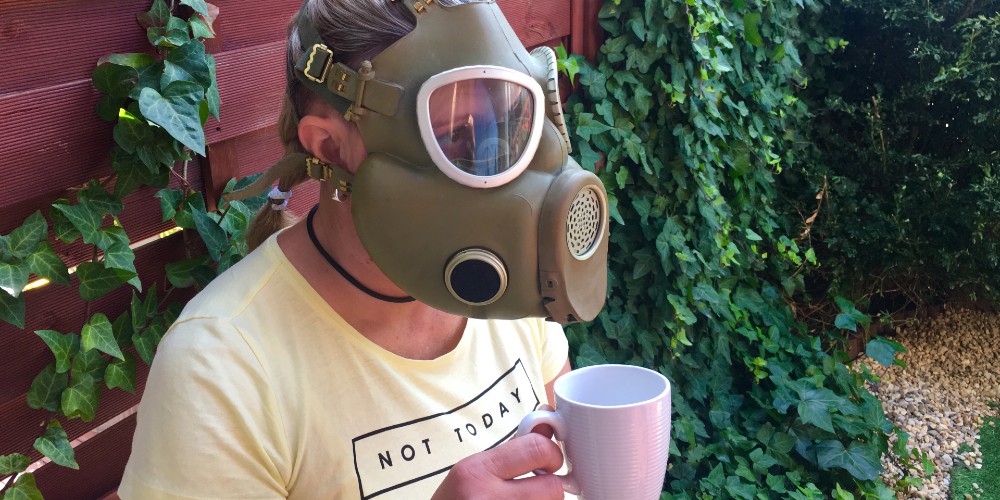
There has been a sharp rise in the number of Americans getting into “prepping.” I’m a late prepper myself, having only really begun making the necessary changes in my life over the past year or so. But whether you’re an experienced prepper, new to the game, or just interested in making some changes due to all of the crazy things happening in America and across the globe, here are ten things you should be preparing for now.
Watch or listen to today’s episode of The JD Rucker Show on Brighteon, Rumble, Bitchute, or Apple Podcasts.
1. Assess YOUR Situation and Be Honest

The first rule of prepping is to make a plan. Then, share the plan with everyone involved. Practice the necessary parts of the plan. That’s prepping 101.
But no matter what any experts tell you, the most important part of making a plan is assessing YOUR situation. Only you and your family know what assets you have, what risks are around you, and what might happen if things start going south in a hurry.
If there’s an economic collapse, do you have money in different forms available in your home? What if the internet goes down? If you live in a city, do you expect there to be riots? Are your own neighbors trustworthy? If you job starts mandating new vaccines, do you know how to respond? Will you take them? Do you have ways to secure revenue or live off savings if your employers get draconian?
How will you communicate with loved ones in a societal collapse? Should you consider moving out of the city (yes)? Assessing your situation will determine how you handle the rest of the list, what applies, and what you’ve already got covered.
2. Stock Up on Guns and Ammunition

Leftists have been coming after our guns for a long time, but never in American history have they been closer to actually achieving their goals. Unfortunately, more and more Republicans are joining Democrats in adding “incremental” restrictions to firearm ownership in America.
It is going to get harder and harder to acquire firearms and ammunition in the future. The way they see it, they have two-and-a-half years to cripple gun owners in America. And if you think a “red wave” in November is going to fix things, think again. Both possible Senate Majority Leader Mitch McConnell and possible Speaker of the House Kevin McCarthy have expressed interest in some degrees of gun control.

Even if they don’t go into full gun-confiscation mode, they’re at least going to try to raise taxes on guns and ammunition exponentially. Local and state governments are already in the process of doing so. The bottom line is this: Firearms and ammunition are not going to be cheaper or more accessible than they are right now. Get them while you can. This is why we picked up our first-ever firearms sponsor.
3. Practice Energy Frugality and Acquire Alternative Energy Sources
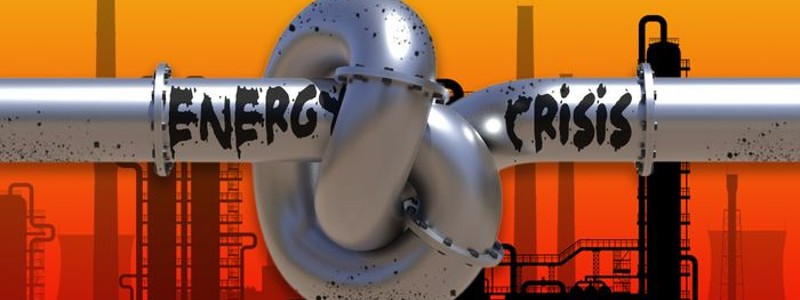
We’ve seen what’s been happening with gas prices. That’s just the beginning. This manufactured energy crisis is expanding to electricity, natural gas, propane, and diesel. Rolling blackouts and massive price increases are already getting started.
There was a time when I didn’t see a point in being super-frugal about energy. My father-in-law used to keep all lights off in his house until the sun was completely down and you couldn’t see anything without lights on. Then, he would make sure any room that wasn’t being used had lights off. He’d even turn off his television to get up and use the restroom.
I thought it was silly. I did the math and came to the conclusion a light on all day and night for a month wasn’t much of a change in the electric bill. Today, I’ve taken the opposite approach and adopted my father-in-law’s advice. It isn’t just about saving on bills. It’s about preparing for energy scarcity, something most in this nation have never experienced for long periods of time.
It’s also a best practice to acquire alternative energy production methods such as solar generators. I wish I could make a recommendation here, but after trying out three different solar generators and solar panels, I’m not impressed. Granted, I went cheap on the ones I tried, so I may have to save up and try out the more expensive ones.
Do your research and get solar, wind, or whatever type of personal energy systems you can acquire in case the grid goes down.
4. Stock Up on Food, Especially Proteins
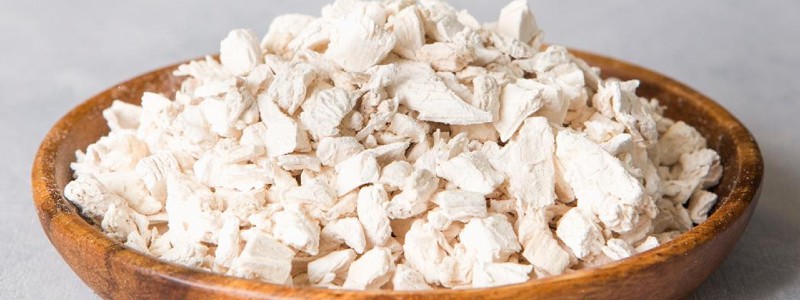
There have been times in the recent past that I’ve talked about beans and rice. The combo forms a proper protein. They’re cheap and available. It made sense to recommend them.
While I’m not going to tell anyone not to stock up on beans and rice, they’re no longer a priority. Their prices haven’t gone up as much as other foods and their availability for now appears normal. Proteins, on the other hand, seem to be fading in availability and rising in price. That’s why I’m now pushing people toward getting as many storable meats as possible.
For any long-term storage foods, proteins or not, we have three sponsors who offer a wide variety of options. Get stocked up as soon as possible. Food is not going to be cheaper in the near future. The only proteins they may offer at some point down the line could be bugs. I won’t be eating bugs.
5. Backup Your Files and Start Storing Important Docs Locally

Way back when, it was a best practice to backup files on floppy disks or external drives. Today, many if not most people have everything in the “cloud” with either copies on their local computer or not at all. This is risky, especially for important documents, because we are one cyberattack or digital collapse away from not having access to the internet for extended periods of time.
A 5-terabyte hard drive on Newegg is around $100. That’s enough space for most Americans to save all their files and even store some movies, shows, documentaries, or whatever digital entertainment or education you may need if the internet crashes.
6. Secure Alternative Meds and Other Medical Supplies
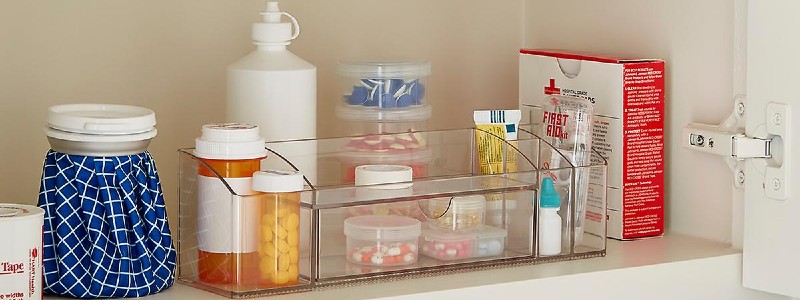
This may be the most challenging prep for many people. Some are dependent on the healthcare system in America staying intact. In a societal collapse, it may be difficult to get the treatments or medications we need.
One thing people can do is search for alternative available treatments, supplements, or natural remedies. It’s not going to work for everything, but we have to do what we can to stay as healthy as possible.
Eyecare and other specific needs that can be stocked up on should be considered. I’m blind without corrective lenses. I now have two pairs of glasses (and will get a couple more when the cash is available) as well as a year’s supply of contact lenses.
Antibiotics may be challenging to acquire in a crap-hits-the-fan situation. I can imagine a near-future scenario when all such prescriptions are only available to those who get the upcoming Omicron-specific jabs. This is why we just picked up a sponsor who offers emergency cases of five antibiotics available through telehealth. It’s easy and designed to last through societal challenges.
7. Prepare for Worse Lockdowns Than Before
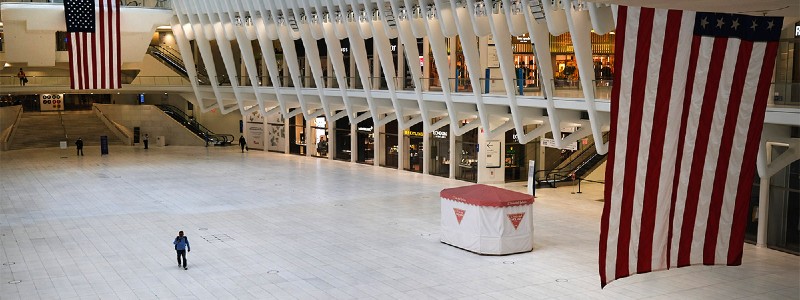
Remember two weeks to slow the spread? That lasted two years and required a ton of protests to get them to finally reverse their ineffective policies. What will happen when Pandemic Panic Theater 2.0 and 3.0 hit? Whether it’s BA.5, Monkeypox, Hemorrhagic Fever, or something else, we believe they’re going to hit us with something in the near future, possibly before the midterms.
It behooves us to have enough supplies to wait out the lockdowns, even as we protest them. For some, that might mean two-weeks worth of supplies. Or two-months. Or even two-years.
The reason we want supplies for a lockdown is because I anticipate they will force people who aren’t prepared to jump through hoops. Again, that could be a new jab. It could be adherence to certain policies. If you don’t think something as draconian as a social credit score could never come to the United States, you probably also thought that a disease with a 99.93% recovery rate for healthy people under 50 would never be used to destroy the economy in the United States.

8. Assume the Dollar’s Demise and Plan Accordingly
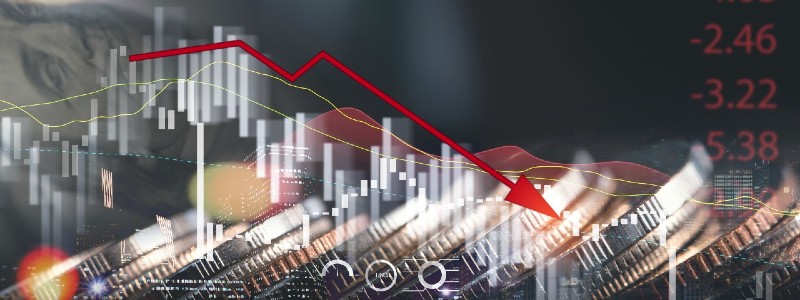
Diversify and keep your money close. Those are the best practices here. We’re in a recession. Inflation is still skyrocketing. The U.S. Dollar is being attacked by forces in and out of America. It’s not time to be sitting around with all your money in the bank or stock markets.
Many of us have a lot of our financial resources online. What will we do if we don’t have access to it? Having money in multiple forms available at home is smart today and pretty much any time going forward.
Gold and silver are obviously investments I recommend. We have a couple of precious metals sponsors we work with to supply readers and listeners with physical gold and silver. Whether to secure wealth or protect your retirement, it is a good idea to put a good percentage into physical precious metals delivered to your home and/or gold and silver IRAs.
9. Make Friends and Family Aware of Challenges Ahead

One of the things most preppers recommend that I disagree with is keeping your preps secret. No, I’m not saying we should broadcast the fact that we’re prepping to everyone in the neighborhood. But it’s the right thing to do to tell friends and family that you’re prepping, why you are, and why they should be as well.
It’s not all about being a good brother or sister. It’s about building a localized network of people who are better prepared than most. There will be those who work in networks to rob those who have prepared. It makes sense to make a counter-network among your friends and family. Also, refer back to recommendation #2 on this list.
10. Learn and Share the Gospel

I’m not going to get preachy. I’ll leave it by saying if you do only one of these ten things, this is it. Food and water are important. Your soul is infinitely more so.

We are told to share the truth, bringing the Gospel to the nations. For us as individuals, that means sharing it with those who will listen. Read your Bible and pray. Whether society crumbles or not, the most important thing you can ever do is embrace the Gospel and spread it to others.
Image via Shutterstock.
Bypass Big Tech Censors

Two Storms, One Harvest

Every food crisis in living memory has been a one-shock event. The 2008 price spike was a commodity bubble. The 2020 shortages were a logistics failure. The 2022 grain scare was a war on one exporter’s ports. Each time, the system bent, adjusted, and recovered, and each time the experts assured us afterward that global markets are simply too big and too diversified to fail.
What nobody in Washington seems eager to discuss is that 2026 is shaping up to be something the modern food system has never actually faced. Two independent shocks, one climatic and one geopolitical, are converging on the same harvest cycle at the same time. Not sequentially. Simultaneously.
Start with the weather. The Pacific Ocean is currently building toward what forecasters now openly call a record event. NOAA’s Climate Prediction Center puts the odds of at least a strong El Niño near 88 percent, with roughly two in three odds it reaches “very strong” status, the tier reserved for perhaps three or four events in the entire satellite era. Every major global model now projects a median peak in Super El Niño territory, and most of them project it exceeding the 2015-16 event, which until now held the modern record. Sea surface anomalies were already brushing the super threshold in mid-July, months before these events normally peak. The atmosphere has already shifted into El Niño mode, and the event is forecast to crest in late fall and early winter.
This is not about “climate change.” It’s about the standard cycles of weather, and the cycle we’re currently in is one that has likely devastated societies in the past. We’re better prepared as a society today, but not all Americans are equally prepared.
Serious households have started doing the quiet math on their own. Grocery bills tell part of the story, and the forecast maps tell the rest, which is why long-term food storage has moved from fringe hobby to mainstream line item in the family budget, with established suppliers like Heaven’s Harvest seeing demand from people who five years ago would have rolled their eyes at the idea. That instinct is not paranoia. It is pattern recognition, and the pattern is worth walking through carefully.
Editor’s Note: Heaven’s Harvest IS a sponsor, but the warnings of this article are real and would be written even if we didn’t have a survival food sponsor. With that said, those who take advantage of what they offer can use promo code “Patriot” for 15% off.
The Fertilizer Clock Is Already Running
While the Pacific warms, the second shock has been unfolding in the Strait of Hormuz. The conflict with Iran turned the world’s most important energy chokepoint into a contested waterway, and the consequences reach far beyond the gas pump. Roughly a third of global fertilizer trade moves through Hormuz, and the disruption sent urea prices up 86 percent year over year by March, with a 53 percent jump in a single month.
The World Bank projects energy prices rising about 24 percent in 2026 and fertilizer about 31 percent. By its own accounting, fertilizer prices ran 35 percent higher in the first five months of this year than the same period last year.
Here is the mechanism the nightly news will not explain. Fertilizer is not a grocery item. It is a time-delayed input. The nitrogen a farmer in Iowa or Punjab could not afford to apply this spring does not show up as a problem this spring. It shows up as a thinner harvest six to twelve months later.
The World Bank’s own food security brief concedes that the effects of reduced applications earlier this season “are likely to become visible only later in harvest outcomes.” Translate that from institutional language into plain English and it means this. The damage is already done, it is already in the ground, and we are simply waiting for it to arrive on the shelf.
Now check the calendar. Six to twelve months from the spring planting season lands us squarely in late 2026 and early 2027. Which is precisely when the strongest El Niño in the instrumental record is forecast to peak, bringing its signature droughts to Southeast Asia, Australia, southern Africa, northern Brazil, and South Asia, the very regions that grow the world’s rice, sugar, and oilseeds.
The World Bank warns openly that a strong El Niño “could disrupt multiple crop belts simultaneously” on top of the conflict-driven input costs. Their baseline projection assumes the Middle East disruptions ease by autumn. What in the last two years of Middle East history suggests that assumption is safe?
The System Has No Slack Left
The comfortable answer is that global markets always adjust. But adjustment requires slack, and the slack is gone. Global cereal production is expected to decline from last year’s records even before El Niño does its work. The UN World Food Programme, hardly a den of right-wing preppers, is calling this the most significant disruption to its supply chains since Covid and the invasion of Ukraine, and its supply chain director put the stakes bluntly.
Today’s supply chain challenges are tomorrow’s hunger crisis.
There is also a political dimension that markets cannot price. When food gets scarce, governments do not behave like economists. They behave like politicians. Export bans, hoarding mandates, and panic buying at the national level turned the modest rice shortfall of 2008 into a global crisis, and analysts are already warning that import-dependent nations are the first dominoes.
The 2015-16 Super El Niño, a far weaker event than what is now forecast, threw tens of millions into food stress across Africa and Asia. This one is projected to be stronger, and it arrives with fertilizer already rationed by price and shipping lanes already contested by missiles.
What Joseph Knew
Scripture does not treat preparation for lean years as faithlessness. It treats it as wisdom delivered in advance to those willing to act on it.
Behold, there come seven years of great plenty throughout all the land of Egypt: And there shall arise after them seven years of famine; and all the plenty shall be forgotten in the land of Egypt.
Joseph did not respond to that warning with a hashtag or a committee. He stored grain during the years of abundance, and when the famine came, Egypt stood while its neighbors begged. The lesson is not that famine is certain. It is that the time to prepare is precisely when preparation still looks optional.
Nobody who filled a pantry in a year of plenty has ever regretted it, and nobody standing in an empty aisle has ever been glad he waited for certainty.
None of this calls for panic, and panic is the enemy of sound judgment anyway. It calls for the same unglamorous prudence our grandparents considered ordinary. Keep some cash margin, know your local growers, and put real food in deep storage while it is cheap and available, because the entire arc of this story is that cheap and available is a closing window.
Families looking for a straightforward place to start can visit Heaven’s Harvest and use promo code Patriot for 15 percent off long-term storable food. The forecasts may yet soften, the strait may yet reopen, and we should pray they do. But hope is a fine thing to hold and a foolish thing to eat.