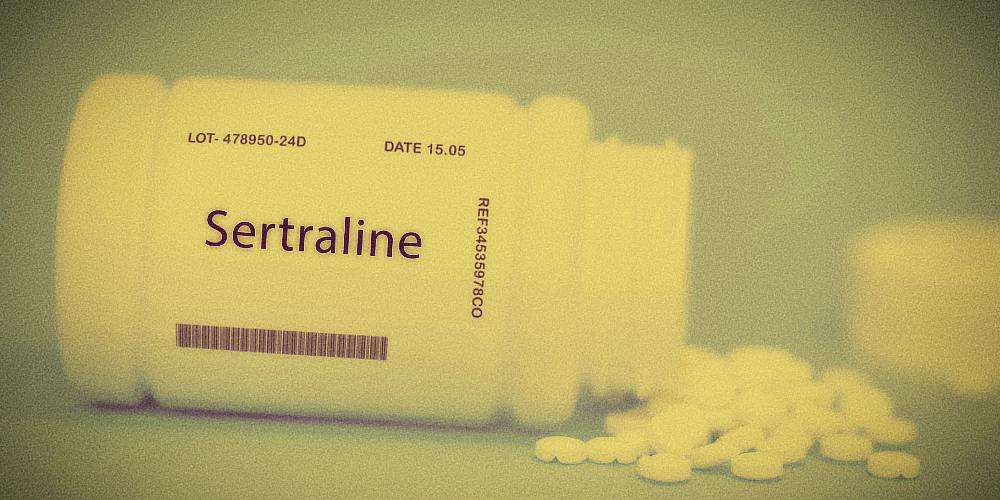
(Brownstone)—President Trump issued an executive order last week creating a Make America Healthy Again Commission, to be chaired by Health and Human Services Secretary Robert F. Kennedy, Jr. Among other targets, the commission will examine “prevalence of and threat posed by the prescription of selective serotonin reuptake inhibitors [SSRIs], antipsychotics, mood stabilizers, stimulants, and weight-loss drugs.”
Kennedy has been outspoken on the danger of SSRIs, linking them to school shootings and stating that members of his family “had a much worse time getting off of SSRIs than they have getting off of heroin.”
Kennedy’s views mortify the mainstream media. The Washington Post did a hefty piece portraying Kennedy’s commission as more dangerous than any drugs prescribed to children. To discover the absolute truth, the Post turned to the CEO of the American Psychiatric Association, who assured the Post that “psychiatric drugs can be very effective and generally are given to children carefully after front-line treatments such as talk therapy.”
Decades ago, who would have expected an apology for Adderall, Prozac, Zoloft, and similar drugs to sound like a pitch for Kellogg’s breakfast cereals? Prescription drug use is skyrocketing. Antidepressant prescriptions for young Americans aged 12 to 25 increased by 66% between 2016 and 2022.
The New York Times reported last year that many young people were left worse off thanks to “mental health interventions.” The Times showcased psychiatric “prevalence inflation” – a vast increase in reported mental illness among teenagers who are encouraged to view normal feelings as grave maladies requiring intervention. Oxford University psychologist Lucy Foulkes observed that school programs are “creating this message that teenagers are vulnerable, they’re likely to have problems, and the solution is to outsource them to a professional.”
Foulkes explained that “awareness efforts” spur young people “to interpret and report milder forms of distress as mental health problems.” Filing such complaints “leads some individuals to experience a genuine increase in symptoms, because labeling distress as a mental health problem can affect an individual’s self-concept and behavior in a way that is ultimately self-fulfilling.”
Like a New Yorker cartoon from the 1950s, psychiatric diagnoses have become status symbols, propelled by snake oil “social-emotional learning” programs. University of Southern California clinical psychologist Darby Saxbe warns that mental illness labels have “become an identity marker that makes people feel special and unique. That’s a big problem because this modern idea that anxiety is an identity gives people a fixed mindset, telling them this is who they are and will be in the future.” Psychiatric labels can become a ball-and-chain that people drag behind them. Endless classroom presentations on mental health spur “co-rumination” – excessively talking about one’s problems – which evokes memories of first dates from hell.
Hungarian-American psychiatrist Thomas Szasz warned in the last century, “Psychiatrists manufacture mental diagnoses the way the Vatican manufactures saints.” But protests by Szasz and other dissident shrinks did nothing to prevent a sham stampede.

The American Psychiatric Association’s Diagnostic and Statistical Manual of Mental Disorders (DSM) now lists more than 300 mental illnesses, five times as many as it specified in the 1960s. Dr. Allen Frances, writing in Psychology Today, warned that the latest DSM contained “many changes that seem clearly unsafe and scientifically unsound” and is “likely to lead to massive over-diagnosis and harmful over-medication.”
After the DSM redefined autism in the 1990s, the autism rate “quickly multiplied almost 100 fold.” Thanks to another DSM redefinition, the “number of American children and adolescents treated for bipolar disorder increased 40-fold” between 1993 and 2004, the New York Times reported. Psychiatrist Laurent Mottron complained in 2023 that the latest version of the DSM “is full of vague and trivial definitions and ambiguous language that ensures more people fall into various, abnormal categories.”
The DSM provides a road map for federal law. The Americans with Disabilities Act (ADA) compels schools and universities to provide “reasonable accommodation” to students who claim to have a disability, physical or mental. Even before the pandemic, up to 25% of students at top colleges were “classified as disabled, largely because of mental-health issues such as depression or anxiety, entitling them to a widening array of special accommodations like longer time to take exams,” the Wall Street Journal reported in 2018. Similar string-pulling occurs for the rigorous entrance exams for New York City’s elite high schools, where “white students…are 10 times as likely as Asian students to have a [disability] designation that allows extra time,” the New York Times reported.
Between 2008 and 2019, the number of undergraduate students diagnosed with anxiety increased by 134%, 106% for depression, 57% for bipolar disorder, 72% for ADHD, 67% for schizophrenia, and 100% for anorexia, according to the National College Health Assessment. Students’ struggles skyrocketed after Covid shutdowns. A Boston University analysis of students on almost 400 campuses in 2022 found that “60% of the respondents met the qualifying criteria for ‘one or more mental health problems, a nearly 50% increase from 2013.’” But awarding endless psychiatric Purple Hearts will do nothing to help college graduates adjust to the challenges of life beyond the classroom.
I recognized that the DSM was becoming unhinged after attending the 1986 annual meeting of the American Psychiatric Association in Washington. Here are some riffs from a Detroit News op-ed I wrote at that time:
The APA served attendees a batch of freshly-ordained mental illnesses, including “premenstrual dysphoric disorder.” The APA says symptoms of this “mental illness” include “irritability,” “marked fatigue,” and “negative evaluation of self.” According to the APA’s definition, a third of all women go crazy once a month.
The second newly ordained mental illness is “self-defeating personality type,” previously known as common or garden-variety masochism. The symptoms for this grade disorder include, “complaints, directly or indirectly, about being unappreciated,” “repeatedly turns down opportunities for pleasure,” and “remains in relationships in which others… take advantage of him or her.” Bring on the Valium!
The third “discovery” was guaranteed to raise the APA’s popularity with trial lawyers. The APA tentatively decided that anyone who persistently fantasizes about or actively forces a non-consenting person to have sex suffers from “paraphilic rapism.” In other words, a person would have to be nuts to rape somebody. As one protester at the APA’s meeting declared, “Sexual assault is a crime – not a mental disorder.” The Committee of Women of the APA said the new category would “provide an instant insanity plea for anyone charged with rape.”
If shrinks only cleaned out people’s wallets, then they would be no more harmful than your average politician. But psychiatrists nowadays routinely rely on mind-numbering drugs and mind-shattering electric shock treatments. Some mental patients are developing Parkinson’s disease symptoms as a result of years of heavy medication. Electric shock “therapy” – aside from being a terrifying experience – sometimes causes permanent memory loss, thus making it harder for a patient to handle reality.
We have new mental illnesses not because of new breakthroughs in understanding the mind, but because psychiatrists want more money and more power over the rest of us. Shrinks generally have a poor batting average for curing known mental problems – but that has not stopped them from creating new “illnesses” that supposedly they alone can treat. But a con artist with an MD is still a con artist.
My carping did nothing to slow the white-coated hucksters. In 2019, the American Psychological Association officially designated traditional masculinity as a de facto mental illness. Their new guidelines specifically state that “stoicism” and other traits are “on the whole, harmful.” Did Marcus Aurelius spin in his grave? Apparently, instead of toughing out challenges, people are supposed to spend their lives whimpering to shrinks and getting appropriately drugged. At least prior to the current administration, the Food and Drug Administration has been a shill for Big Pharma and is unlikely to expose or admit the long-term harm from drugs that can partially numb minds.
Psychiatrists have helped some individuals better understand themselves and deal more deftly with everyday reality. But bogus mental illnesses have turned millions of healthy Americans into “mental patients,” according to Dr. Allen Frances.
But this peril also profoundly endangers freedom. The profusion of new diagnostic labels encourages people to view themselves as psychologically fragile. Actually, the Americans with Disabilities Act rewards people who demand “reasonable accommodations” (extra time for tests, no deadlines, etc.) because they are depressed or anxious. Those incentives create a downward politico-psychological spiral.
Kennedy’s commission will report to Trump within 100 days on the “potential over-utilization of medication” and other unrecognized health perils in America. Hopefully, the commission will deliver a stunning, well-documented report that will help people recognize how psychiatrists have concocted labels that have left millions of Americans at their mercy.
About the Author
James Bovard, 2023 Brownstone Fellow, is author and lecturer whose commentary targets examples of waste, failures, corruption, cronyism and abuses of power in government. He is a USA Today columnist and is a frequent contributor to The Hill. He is the author of ten books, including Last Rights: The Death of American Liberty.
Bypass Big Tech Censors

Starting the Day With a Scripture-Inspired Roast Helps Center Your Thoughts on Eternal Truths Amid Temporal Pressures
The world can seem chaotic, especially right after we wake up. Many believers start their mornings reaching for something familiar — a hot cup of coffee — yet end up settling for mediocre brews that do little more than deliver a caffeine jolt. The daily grind of life, with its endless distractions, news cycles, and responsibilities, can leave even the most faithful feeling spiritually parched alongside their physical fatigue. What if your morning ritual could do more than wake you up? What if it could ground you in truth, nourish your body with exceptional quality, and quietly advance a kingdom purpose at the same time?
That’s the promise — and the reality — behind Promised Grounds Coffee. This Christian-founded company doesn’t just roast beans; it approaches every step as an act of worship and discipleship. By selecting only the top 10% of specialty-grade beans, ethically sourced from dedicated farmers in Central and South America, and small-batch roasting them with reverence in Austin, Texas, Promised Grounds delivers what many describe as the best coffee available — never burnt, never bland, but rich with origin stories and layered flavors that honor God’s creation.
From the vibrant Psalm 27 Roast (a light, bright medium option) to the bold yet peaceful 2 Timothy 1:7 Decaf, each bag carries a Scripture verse that turns your daily pour into a gentle reminder of faith. And through their Ounce Per Ounce Promise, every ounce of coffee you enjoy provides an equal ounce of clean water to families in need via partnership with Filter of Hope — literally brewing hope for body and soul, one cup at a time.
The challenge for today’s Christians runs deeper than finding a decent cup. In an age of convenience-driven consumerism, it’s easy to support companies that dilute values or remain silent on matters of faith. Many believers want their everyday choices — from what they drink to how they spend — to reflect discipleship rather than just convenience. Promised Grounds solves this by weaving Christian excellence into the entire process: beans nurtured with prayerful stewardship by farming families, roasted as an offering rather than a commodity, and packaged with Bible verses to encourage a mindset of gratitude and purpose from the first sip. Reviewers consistently praise the smooth, rich profiles — whether enjoyed black in a drip maker, iced on a warm day, or shared in fellowship — noting how the quality stands toe-to-toe with premium secular brands while delivering something far more meaningful.
This integration of faith and flavor addresses a real need in Christian households and ministries. Busy parents, church leaders, and remote workers alike report that starting the day with a Scripture-inspired roast helps center their thoughts on eternal truths amid temporal pressures. The coffee’s exceptional character — bright citrus notes in lighter roasts or deep chocolate undertones in bolder ones — comes from meticulous selection and careful roasting that respects the bean’s natural gifts rather than masking them. It’s the kind of coffee that elevates a simple quiet time, fuels productive workdays, or sparks meaningful conversations when shared at Bible studies or outreach events. And because it’s ethically sourced with integrity, every purchase supports sustainable livelihoods for farmers who treat their crops like family harvests.
For those leading churches or small groups, the impact multiplies. Promised Grounds offers bundles and options perfect for hospitality ministries, turning ordinary coffee service into an opportunity to point people toward the living water of Christ. Imagine greeting visitors with a warm cup whose very bag carries God’s Word — a subtle yet powerful witness that aligns with the Great Commission. The company’s Texas roots and commitment to “brewing hope” resonate especially with believers who value American enterprise paired with global compassion.
Of course, quality alone isn’t enough if the experience feels out of reach. Promised Grounds keeps it accessible with practical perks like free shipping on orders over $40, sample sets for discovering favorites, and thoughtful add-ons such as faith-themed mugs. Whether you prefer whole beans for fresh grinding, grounds for convenience, or even bulk options for larger households and ministries, the result is consistently superior coffee that makes discipleship feel integrated rather than added on.
As you consider how to align even the smallest habits with your walk with God, Promised Grounds Coffee stands out as a refreshing solution. It tackles the dual problems of subpar daily sustenance and disconnected consumption by offering a product that genuinely excels in taste while advancing a mission of clean water, farmer dignity, and scriptural encouragement. Believers who make the switch often describe it as more than a beverage upgrade — it becomes part of their rhythm of gratitude, a daily invitation to remember that every good gift comes from above.
If you’re ready to transform your mornings (and perhaps your church gatherings) with coffee that honors both exceptional craftsmanship and Christian values, I encourage you to explore what Promised Grounds has to offer. One sip at a time, you’ll be nourishing your body, refreshing your spirit, and participating in something far greater — all while enjoying what truly is among the best coffee available.