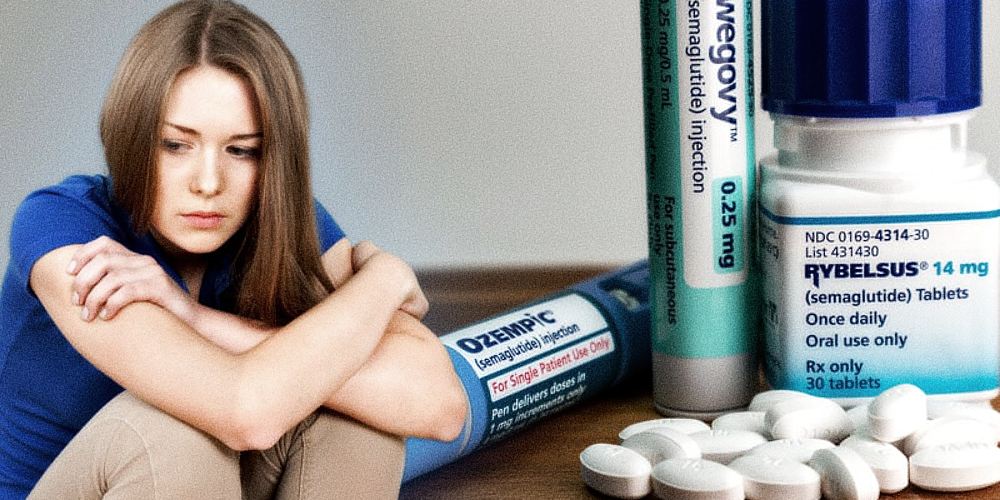
- Ozempic and similar weight loss drugs have been linked to 162 deaths in the U.S., with adverse reactions increasing by 40% in six months as usage expands
- These medications are associated with serious side effects, including pancreatitis, bowel obstruction and stomach paralysis, with 80% to 90% of users experiencing at least one adverse event
- Studies have found a significant link between semaglutide (the active ingredient in Ozempic) and suicidal ideation, particularly in patients also taking antidepressants or antianxiety medications
- Emerging reports indicate severe kidney problems in some patients using these weight loss drugs
- Akkermansia, a beneficial gut bacteria, is a natural alternative to stimulate GLP-1 production, offering similar benefits without the risks associated with drugs like Ozempic
(Mercola)—Glucagon-like peptide-1 (GLP-1) receptor agonists, including semaglutide — the active ingredient in Ozempic and Wegovy — have taken the world by storm. Originally developed for Type 2 diabetes, these drugs’ weight loss properties quickly caught the attention of researchers and the public alike.
Their effectiveness in shedding pounds has led to a global shortage, with an estimated 20 million people using them annually.1 But as with any quick fix, there’s often a catch. According to data from the U.S. Food and Drug Administration’s (FDA) Adverse Event Reporting System (FAERS), these medications have been linked to 162 deaths in the U.S.2
The Daily Mail reports that fatalities mentioning weight loss drugs have increased by 40% in just six months, jumping from 117 to 162 reported deaths.3 This sharp rise coincides with the expanding use of these medications, as more formulations hit the market and off-label prescriptions become commonplace.
However, your risk doesn’t disappear simply because you’re using these drugs as directed. The FAERS data show that adverse reactions occur in patients using these medications for their approved purposes, whether for diabetes management or weight loss.
Ozempic-Related Deaths and ‘Serious’ Reactions on the Rise
The FAERS database reveals a disturbing trend in adverse reactions to weight loss drugs containing semaglutide and tirzepatide (used in Mounjaro and Zepbound). Since 2018, there have been 62,000 reported reactions to these medications in the U.S.4
What’s particularly alarming is that 46,000 of these reports — nearly three-quarters of the total — occurred after 2022. This coincides with the increased availability and marketing of these drugs. Of the 162 reported deaths, 94 were linked to semaglutide-based drugs, while 68 were associated with tirzepatide medications. It’s worth noting that in 2023, tirzepatide was linked to nearly twice as many adverse reactions as semaglutide.5
The FAERS system has recorded 10,000 “serious” reactions to these weight loss drugs, defined as events resulting in hospitalization or life-threatening conditions. These aren’t just minor inconveniences; they’re significant medical events that could have long-lasting impacts on your health.
For instance, Daily Mail reports a case of a 30-year-old man on Ozempic who was hospitalized with pancreatitis, an inflammation of the pancreas that causes severe abdominal pain. In another case, a 49-year-old woman taking Ozempic experienced mania and a dangerous surge in blood pressure, requiring hospitalization.6

While 1.7% of Americans — approximately 5.6 million people — were prescribed weight loss drugs in 2023, recent surveys suggest that number has grown to about 6% of U.S. adults, or 15.5 million people.7 This rapid increase in usage means more individuals are exposed to the serious side effects.
Ozempic Linked to Suicidal Ideation
A comprehensive study analyzing the World Health Organization’s database of adverse drug reactions uncovered more troubling findings about Ozempic.8 The research, which looked at over 36.1 million reports, found a significant link between semaglutide and suicidal ideation.
Out of 30,527 total reports for semaglutide, 107 cases of suicidal or self-injurious reactions were identified, and the association remained significant even after accounting for other factors. The research revealed a 45% increased risk of suicidal ideation in patients taking semaglutide compared to other medications.9
Further, people taking antidepressants or antianxiety medications alongside semaglutide were at an even higher risk of reporting suicidal thoughts — a 150% to 300% increase in suicidal ideation was found among this group.10
A study in Frontiers in Psychiatry revealed insights into semaglutide’s impact on your emotional state and psychological well-being.11 The drug’s main component targets GLP-1 receptors, which are present not just in your digestive tract but also in critical brain areas. These regions, such as the lateral septum and hypothalamus, are essential for managing emotions, reward systems and appetite control.
Semaglutide’s interaction with these receptors modifies the functioning of neural pathways involved in these processes. Particularly noteworthy is its influence on dopamine, a neurotransmitter closely associated with mood regulation and reward perception.
Research indicates that stimulating GLP-1 receptors may enhance dopamine transporter expression, leading to decreased free dopamine levels in specific brain regions. This shift in dopamine signaling might lead to alterations in your mood, motivation levels, and even how you experience pleasure.
Up to 90% of Ozempic Users Experience an Adverse Event
The most common side effects linked to Ozempic and similar drugs are gastrointestinal, including nausea, diarrhea and vomiting. In clinical trials, a staggering 80% to 90% of participants experienced at least one adverse event.12 Though most were mild to moderate, they led some people to discontinue the medication.
Further, these drugs are intended for long-term use — stopping them often results in weight regain — further increasing the risk of side effects over time. While nausea and diarrhea might seem manageable, more severe health risks, including pancreatitis, are a real concern. A study of 16 million patients found that those taking liraglutide or semaglutide had over nine times the risk of developing pancreatitis compared to those on other weight loss medications.13
The same study showed a four-fold increase in the risk of bowel obstruction and nearly four times the risk of gastroparesis (stomach paralysis). Gallbladder issues are another significant concern. Clinical trials revealed higher rates of gallstones and cholecystitis (gallbladder inflammation) in people taking these drugs.14
While rare, some patients required surgery for these complications. It’s also worth noting that these medications increase heart rate.15 There’s also the potential for aspiration during anesthesia. These drugs slow down stomach emptying, which means you may still have food in your stomach even after fasting for the recommended time before surgery. This increases the risk of aspiration pneumonia, a serious complication.
The FDA has also warned that Ozempic causes an intestinal blockage called ileus,16 which can lead to life-threatening complications if not treated promptly.
Another Ozempic Dark Side: Kidney Damage
Troubling reports of severe kidney problems due to Ozempic are also emerging. Research published in the Clinical Kidney Journal reported two patients experienced acute interstitial nephritis (AIN), a serious kidney inflammation, after starting semaglutide.17
One case even involved focal segmental glomerulosclerosis (FSGS), a type of kidney scarring. These findings suggest these drugs pose significant risks to your kidney health, especially if you have pre-existing kidney issues. The first case involved a 68-year-old woman with chronic kidney disease who started semaglutide for weight loss.
Within weeks, she developed severe nausea and vomiting, leading to a dramatic increase in her creatinine levels — a key indicator of kidney function. Even after stopping the medication, her kidney function worsened upon restarting it. A biopsy confirmed acute interstitial nephritis, likely triggered by semaglutide.18
The second case was even more alarming. A 49-year-old woman with no prior kidney issues developed severe swelling and protein in her urine after three months on semaglutide. Her kidney biopsy revealed not only AIN but also FSGS, a condition that can lead to kidney failure.
The study authors suggest that risk factors for these complications may include chronic kidney disease, advanced age, obesity and concurrent use of other medications that can affect the kidneys. A review of the FDA’s adverse event reporting system revealed 2,375 kidney-related events associated with GLP-1 drugs between 2010 and 2022.19
Acute kidney injury was the most common, accounting for nearly 59% of reports. Other reported issues included high blood pressure, electrolyte imbalances and, in rare cases, severe protein loss in the urine.

Akkermansia: A Natural Ozempic Alternative
Sustainable weight loss involves more than just a quick fix. It requires a holistic approach that considers your overall health, including your mental well-being. As tempting as these drugs might seem, especially with their popularity on social media, it’s crucial to make decisions based on scientific evidence rather than anecdotal reports or trends. Your health is too important to gamble with unproven or potentially dangerous solutions.
In my interview with Dr. Colleen Cutcliffe, a molecular biology scientist and the CEO and co-founder of Pendulum, a company that creates microbiome products, she explained that, instead of using Ozempic, you can naturally elevate your GLP-1 levels by increasing the presence of the beneficial bacteria Akkermansia in your gut:
“What happens in your body naturally, if you’ve got all the right microbes, is that you eat a meal, your microbiome metabolizes that food and generates postbiotics [excretions from beneficial bacteria] like butyrate [and] a protein called P9. Some of these postbiotics then signal your body to produce GLP-1.
All that signaling is happening from the microbiome directly to the L cells. And so you eat a meal, your microbiome digests them, these postbiotics get created and tell your L cells, ‘Hey, go produce GLP-1,’ and then you get a spike in GLP-1 in your body.
GLP-1 stimulates your body too. It says, ‘We’ve got to metabolize the sugar in the bloodstream, release insulin.’ It also signals to your brain, ‘We just ate, we’re full, we don’t need to eat again.’ After a period of time, GLP-1 goes down — until the next time you eat a meal. Then it spikes again.
So that’s the natural way of things. There are only two strains that have been published, to date, that have been shown to be able to stimulate L cells to produce GLP-1, and one of them is Akkermansia. It actually secretes three different [postbiotics] that stimulate L cells to produce GLP-1.
So, what’s been found is that if you are low or missing Akkermansia, your body is not naturally producing as much GLP-1 as it’s supposed to be. By giving people back Akkermansia, you can now have these physiological benefits of reducing A1C and lowering blood glucose spikes.
To be clear, the natural GLP-1 you produce is different from the drug. The drug is a mimic. It’s an analog. It looks like GLP-1. It gets injected into the bloodstream directly, which means that rather than the natural spike after you eat [followed by a decline], the [drug] is keeping those levels really high all the time.
So, this signaling of ‘we got to metabolize sugar in the blood and we’re full, we just ate’ is going on constantly. That’s why people experience these incredible, amazing overnight effects because that’s how those drugs are working. But if you actually have the right microbes, you can generate your body’s natural GLP-1 and get back into this natural cycle.”
Many People Are Lacking Akkermansia
Research published in Nature Microbiology found that Akkermansia increased thermogenesis and GLP-1 secretion in mice fed a high-fat diet.20 While Akkermansia plays a vital role in maintaining intestinal health, many individuals have insufficient levels due to compromised mitochondrial function and oxygen leakage in the gut.
One of Akkermansia’s primary functions is the production of short-chain fatty acids (SCFAs), including butyrate. These fatty acids serve as fuel for your colonocytes, which in turn produce mucin, a gel-like protective substance that coats your gut lining.
SCFAs also help remove oxygen from your colon, creating an environment where beneficial bacteria can flourish. Mucin acts as a barrier, shielding intestinal cells from damage, harmful microorganisms and digestive irritants.
Additionally, mucin enhances your immune system. It contains antibodies and antimicrobial peptides that help fight infections. Mucin also functions as a trap for potential pathogens, facilitating their elimination through the digestive process. Akkermansia is so beneficial that it should, ideally, constitute about 10% of your gut microbiome.

Make Sure Live Akkermansia Probiotics Reach Your Colon
When selecting Akkermansia probiotics, opt for products with bacterial counts in the billions rather than millions. Generally, a higher bacterial count is beneficial, but there’s an important caveat: the delivery method is crucial.
Look for probiotics in delayed-release capsules. This feature is essential because it ensures the beneficial bacteria have a higher likelihood of reaching your colon alive. Without this protective mechanism, most of the bacteria may not survive the journey through your digestive system.
Akkermansia are very sensitive to oxygen. This makes their journey through your digestive system very challenging. These beneficial microbes thrive in an oxygen-free environment, and even a brief exposure to oxygen can be fatal for them. This trait makes the delivery method of Akkermansia supplements crucial to their effectiveness.
In fact, a lower-dose probiotic (in the hundreds of thousands of bacteria) that successfully reaches your colon can be more effective than a high-dose product (with hundreds of billions of bacteria) that doesn’t make it to its intended destination. Remember, when it comes to probiotics, successful delivery to the colon is just as important as the initial dosage.
Understanding this helps you choose the most effective supplement. You want to nurture your gut microbiome with live, active Akkermansia, as dead or inactive ones won’t do you as much good as they don’t reproduce.
If you want to use Akkermansia supplements, look for ones with advanced, dual-timed release capsules or microencapsulation. These technologies keep Akkermansia dormant and protected until it reaches your colon, usually in two to four hours.
To maximize its effectiveness, take it on an empty stomach, ideally first thing in the morning after an overnight fast. Wait at least one to two hours before eating to reduce transit time, allowing the bacteria to reach your colon faster — usually within two hours. This will greatly increase the number of live bacteria that make it to your colon.
Avoid taking probiotics with food, as this can extend your transit time to over eight hours, likely killing the bacteria long before they reach your colon. Being mindful of when and how you take your Akkermansia probiotic will maximize the benefits of this powerful probiotic.
- 1, 8, 9 JAMA Netw Open. 2024 Aug 20;7(8):e2423385
- 2, 3, 4, 5, 6, 7 Daily Mail September 8, 2024
- 10 ZeroHedge August 21, 2024
- 11 Front Psychiatry. 2023 Aug 29;14:1238353
- 12, 13, 14, 15 Obes Pillars. 2024 Aug 31;12:100127
- 16 U.S. FDA, Drug Safety-related Labeling Changes, Ozempic September 22, 2023
- 17, 18, 19 Clin Kidney J. 2024 Aug 13;17(9):sfae250
- 20 Nature Microbiology volume 6, pages 563–573 (2021)
Bypass Big Tech Censors

Two Storms, One Harvest

Every food crisis in living memory has been a one-shock event. The 2008 price spike was a commodity bubble. The 2020 shortages were a logistics failure. The 2022 grain scare was a war on one exporter’s ports. Each time, the system bent, adjusted, and recovered, and each time the experts assured us afterward that global markets are simply too big and too diversified to fail.
What nobody in Washington seems eager to discuss is that 2026 is shaping up to be something the modern food system has never actually faced. Two independent shocks, one climatic and one geopolitical, are converging on the same harvest cycle at the same time. Not sequentially. Simultaneously.
Start with the weather. The Pacific Ocean is currently building toward what forecasters now openly call a record event. NOAA’s Climate Prediction Center puts the odds of at least a strong El Niño near 88 percent, with roughly two in three odds it reaches “very strong” status, the tier reserved for perhaps three or four events in the entire satellite era. Every major global model now projects a median peak in Super El Niño territory, and most of them project it exceeding the 2015-16 event, which until now held the modern record. Sea surface anomalies were already brushing the super threshold in mid-July, months before these events normally peak. The atmosphere has already shifted into El Niño mode, and the event is forecast to crest in late fall and early winter.
This is not about “climate change.” It’s about the standard cycles of weather, and the cycle we’re currently in is one that has likely devastated societies in the past. We’re better prepared as a society today, but not all Americans are equally prepared.
Serious households have started doing the quiet math on their own. Grocery bills tell part of the story, and the forecast maps tell the rest, which is why long-term food storage has moved from fringe hobby to mainstream line item in the family budget, with established suppliers like Heaven’s Harvest seeing demand from people who five years ago would have rolled their eyes at the idea. That instinct is not paranoia. It is pattern recognition, and the pattern is worth walking through carefully.
Editor’s Note: Heaven’s Harvest IS a sponsor, but the warnings of this article are real and would be written even if we didn’t have a survival food sponsor. With that said, those who take advantage of what they offer can use promo code “Patriot” for 15% off.
The Fertilizer Clock Is Already Running
While the Pacific warms, the second shock has been unfolding in the Strait of Hormuz. The conflict with Iran turned the world’s most important energy chokepoint into a contested waterway, and the consequences reach far beyond the gas pump. Roughly a third of global fertilizer trade moves through Hormuz, and the disruption sent urea prices up 86 percent year over year by March, with a 53 percent jump in a single month.
The World Bank projects energy prices rising about 24 percent in 2026 and fertilizer about 31 percent. By its own accounting, fertilizer prices ran 35 percent higher in the first five months of this year than the same period last year.
Here is the mechanism the nightly news will not explain. Fertilizer is not a grocery item. It is a time-delayed input. The nitrogen a farmer in Iowa or Punjab could not afford to apply this spring does not show up as a problem this spring. It shows up as a thinner harvest six to twelve months later.
The World Bank’s own food security brief concedes that the effects of reduced applications earlier this season “are likely to become visible only later in harvest outcomes.” Translate that from institutional language into plain English and it means this. The damage is already done, it is already in the ground, and we are simply waiting for it to arrive on the shelf.
Now check the calendar. Six to twelve months from the spring planting season lands us squarely in late 2026 and early 2027. Which is precisely when the strongest El Niño in the instrumental record is forecast to peak, bringing its signature droughts to Southeast Asia, Australia, southern Africa, northern Brazil, and South Asia, the very regions that grow the world’s rice, sugar, and oilseeds.
The World Bank warns openly that a strong El Niño “could disrupt multiple crop belts simultaneously” on top of the conflict-driven input costs. Their baseline projection assumes the Middle East disruptions ease by autumn. What in the last two years of Middle East history suggests that assumption is safe?
The System Has No Slack Left
The comfortable answer is that global markets always adjust. But adjustment requires slack, and the slack is gone. Global cereal production is expected to decline from last year’s records even before El Niño does its work. The UN World Food Programme, hardly a den of right-wing preppers, is calling this the most significant disruption to its supply chains since Covid and the invasion of Ukraine, and its supply chain director put the stakes bluntly.
Today’s supply chain challenges are tomorrow’s hunger crisis.
There is also a political dimension that markets cannot price. When food gets scarce, governments do not behave like economists. They behave like politicians. Export bans, hoarding mandates, and panic buying at the national level turned the modest rice shortfall of 2008 into a global crisis, and analysts are already warning that import-dependent nations are the first dominoes.
The 2015-16 Super El Niño, a far weaker event than what is now forecast, threw tens of millions into food stress across Africa and Asia. This one is projected to be stronger, and it arrives with fertilizer already rationed by price and shipping lanes already contested by missiles.
What Joseph Knew
Scripture does not treat preparation for lean years as faithlessness. It treats it as wisdom delivered in advance to those willing to act on it.
Behold, there come seven years of great plenty throughout all the land of Egypt: And there shall arise after them seven years of famine; and all the plenty shall be forgotten in the land of Egypt.
Joseph did not respond to that warning with a hashtag or a committee. He stored grain during the years of abundance, and when the famine came, Egypt stood while its neighbors begged. The lesson is not that famine is certain. It is that the time to prepare is precisely when preparation still looks optional.
Nobody who filled a pantry in a year of plenty has ever regretted it, and nobody standing in an empty aisle has ever been glad he waited for certainty.
None of this calls for panic, and panic is the enemy of sound judgment anyway. It calls for the same unglamorous prudence our grandparents considered ordinary. Keep some cash margin, know your local growers, and put real food in deep storage while it is cheap and available, because the entire arc of this story is that cheap and available is a closing window.
Families looking for a straightforward place to start can visit Heaven’s Harvest and use promo code Patriot for 15 percent off long-term storable food. The forecasts may yet soften, the strait may yet reopen, and we should pray they do. But hope is a fine thing to hold and a foolish thing to eat.