(Alt-Market)—There are two primary obstacles to finding the truth in any given situation: Cognitive dissonance and propaganda. One always feeds into the other. Effective propaganda works because it caters to the biases or fears of it’s target audience. Cognitive dissonance is the open door through which propaganda enters the mind and controls it.
When it comes to Donald Trump and his administration, there is a LOT of propaganda and cognitive dissonance, and the vast majority of it is weaponized against him rather than for him. If you are unbiased, this is blatantly obvious. If you are hoping for his administration to fail, then you won’t see it at all; you’ll simply find a reason to see the worst.
For those reading this in the expectation that I am going to fuel their hobby of Trump hate, sorry to disappoint. I only care about facts and evidence, I don’t care about the concerns of foreign or domestic movements seeking to engineer public opinion, and there’s a lot of them.
Iran Was Only One Of Many Opponents
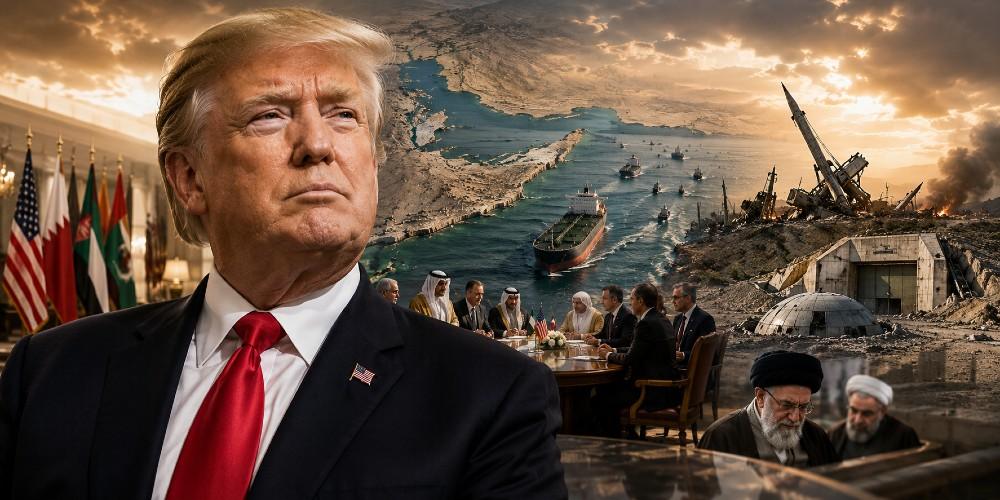
There is a vast network of disinformation operatives across the political landscape, mainstream media and social media. All of these people and the groups they work for have been pumping the information space with endless lies, specifically about the war in Iran and the peace negotiations.
Despite the disinformation, the outcome has been a massive win for Trump on almost every level. This position is going to anger some folks – I really don’t care. Some people just don’t comprehend the bigger picture of this event. Others are outright denying the victory because they NEED Trump to lose, or they need the public to interpret the peace deal as a loss.
It’s important to understand that Iran is not the only adversary in the war. It’s not even the most dangerous adversary. There are a number of subversive groups in the US vying to control the narrative. I separate these naysayers into four categories:
The Neo-Con Warmongers: People like John Bolton, Lindsey Graham or Mike Pence (the Atlantic Council crowd) who have long wanted all out annihilation of Iran and they don’t care how many American lives are put at risk to achieve that goal. They’re angry about the peace deal because it sabotages their agenda for total regime change and US occupation of the region.
The Israeli Lobby: Like the Neo-Cons, the Israeli lobby wants a ground invasion and total regime change. Long have they held up the threat of a nuclear Iran as a rationale for US ground deployment. Yes, they have a right to defend themselves. No, it is not America’s job to do their fighting for them. If we do, it must be because our interests are being met in the process.

The Political Left: The left wants a quagmire in Iran because they think it would jump-start their own midterm election campaigns. They are also trying to form an alliance with Islamic interests as a way to tear down western civilization, The leftists see any win for Trump, any positive news, as a threat to their return to power.
The Black Pillers: One thing I’ve noticed about the cognitive dissonance surrounding the Iran deal is that some people, including commentators I have a lot of respect for, have been joining the propaganda train without looking at the bigger picture. Iranian state media has consistently posted misleading claims during negotiations, yet, there are liberty movement personalities who jump on every news release from Iran as if it is golden.
For the black pillers, I think this is about not wanting to be proven wrong. They said the conflict was going to turn into WWIII. They said the Hormuz closure was going to crash the global economy. They said Trump was going to deploy tens-of-thousands of ground troops and that US naval ships would be destroyed by hypersonic missiles. They were all wrong. None of this happened.
I also warned of these outcomes for many years – Outlining the many pitfalls of a long term war. However, as soon as I realized what Trump was actually doing and that a ground invasion was not part of the plan, I had to change my perspective.
How Trump Won
In my article “Global Energy Crisis Or Iranian Surrender In Five Weeks?”, published in March, I explained how Trump’s goal of forcing the Iranian regime to the negotiating table could be achieved WITHOUT a ground invasion (potentially saving thousands of lives). This was my “blockade of the blockade” strategy designed to strangle Iran’s oil industry. Two weeks later, the Trump Admin implemented this exact strategy.
Keep in mind, at the time everyone was saying that Iran was going to fight to the last man and that they had no reason to negotiate. It took longer than five weeks after the blockade to pressure Iran into a deal; it took nine weeks instead. I believe the blockade was integral to this outcome.
The critics (and special interest groups) now argue that the deal is a form of US “capitulation”. Not long ago they were saying a deal was impossible. But every group has different and often ridiculous notions of what victory is supposed to look like. Let’s examine the actual end result Trump has accomplished…
Why The Peace Deal Is An Undeniable Victory For The Trump Admin
At least two levels of Iran leadership destroyed. Iran’s missile and drone attacks declined significantly towards the middle of the war, suggesting their ability to launch has been diminished. Iranian leadership was forced into negotiations. The Strait of Hormuz is wide open without tolls. Iran’s 60% enriched nuclear materials are buried under a mountain range and the weapons program is officially ended. IAEA and US inspectors will supervise the dilution of those materials once they are finally dug up, and will likely remove the Uranium from the country under US watch.
As a side effect, the OPEC oil cartel is ending. The UAE has announced it’s exit, which means other members will exit in order to compete with the UAE’s increased oil production. This means a lot more oil on the market and much lower prices in the long run.
But what did Iran supposedly get in return? This is where the propagandists step in and lie about the details of the deal, often by omission.
Iran Gets Nothing That Can’t Be Easily Taken Away Again
Lets address the common claim that Iran is getting a $300 billion payout from the US. This is false and a deliberate misrepresentation of the facts. First, this potential investment fund does not exist yet, it is simply an idea on paper. Second, not a single penny of US taxpayer dollars will go to Iran as a part of this fund if it is ever established.
The fund is presented as a possible carrot for the Iranians, made up of private foreign investments largely from neighboring countries. It would be implemented IF the Iranians behave and broadly change their governmental policies, likely over the course of years.

All the leverage is in the hands of the Trump Admin to allow this fund to be created or taken away at any given moment. The claim that this is “reparations” from the US is a lie. The claim that Iran is being paid in exchange for a deal is a lie.
What about the unfreezing of Iranian assets? Is that capitulation for the US? No, it’s not. These assets already belonged to Iran before the war. If the war ends, of course they’re going to get those assets back eventually. Beyond that, the US only holds around $2 billion of the total funds, the rest is scattered across a dozen other countries.
What about tolls on the Hormuz?
There are endless claims that this is going to happen, but it’s not. Nowhere in the peace deal is there a provision for Iran to institute tolls on the Hormuz. It is true that the current MOU is a foundation for more detailed negotiations over the next 60 days, but again, NO ONE in the Trump Admin has agreed to a toll system, and they won’t. Because doing so would set a precedent for international waterways around the globe and that can’t be allowed by any government.
It should be noted that Iran didn’t even have leverage over the Hormuz during the conflict. US naval operations allowed over 200 oil tankers through the strait without Iran being able to stop them. The insurance companies are a greater obstacle to ships traversing the strait than Iran is.
I believe that the US blockade of the Hormuz did, in fact, lead to serious damage to a number of Iran’s oil wells. I think we will be hearing more about this damage in the coming months. Meaning, Iran’s ability to maintain their economy has just been significantly reduced. I believe the peace deal focuses so much on possible funds exactly because Iranian oil capacity has just been cut. In order to get them to commit, there has to be some light at the end of the tunnel. This is negotiations 101.

What about high oil and gas prices? Isn’t this a detriment for Republicans in the midterms? To be clear, there is no indication of an actual supply shortage during the blockade of the Hormuz. Oil prices are plummeting exactly because the majority of the market shock was caused by speculation, not shortages (once again, the skeptics were wrong). This will result in large cuts at the gas pump over the course of the next six weeks, unless a crisis occurs.
And how about the Uranium, the main reason the war was launched in the first place? Yes, the Iranians were building everything they needed to produce nuclear weapons. And yes, the US now essentially controls those resources.
For years we heard the argument that Iran was close to a nuke, but most of us didn’t believe it because of past government disinformation on Iraqi WMDs. This situation is different. Iran has openly admitted to having nearly 1000 pounds of 60% enriched Uranium, and they admit that it can be further enriched to weapons grade (90%) in a matter of weeks. The war revealed that Iran’s ballistic missiles have far more range that initially predicted, and they have the ability to strike all of Europe including the UK.
The regime asserts that they did not intend to use these components to make an actual bomb, but if this is true, why didn’t they just give up the enriched Uranium in the very beginning? It’s only useful for one thing. Why risk all-out war over it, unless they fully intended to make nukes? Anyone with a brain can see what they were up to.
One might argue that Iran should be allowed to have nukes and that the war was unjust. I disagree.
The authoritarian Islamic regime should not be allowed to have such weapons. Trump was right about this, and yes, the war as it stands was worth it. A culture that believes they will be rewarded in heaven in exchange for righteous religious suicide should never have access to weapons that can destroy entire cities in the blink of an eye. No one is ever going to convince me otherwise.

Some Lessons From The War
If Iran was successful in anything, it was the exploitation of western social media in order to spread disinformation. I suspect they probably had a lot of help with this, perhaps from Russia or China. Meanwhile, they locked their population out of the internet, making it impossible for local dissidents to post contrary information.
The Trump Admin continues to fall behind the curve when it comes to countering foreign propaganda and left-wing propaganda. That said, they’ve improved a lot over the past two months.
Trump’s political base support has not changed despite the war. People who claimed he was going to lose conservatives were utterly wrong. But, if he had initiated a ground war, I think this would not be the case.
Finally, weapons provided to Iran by China and Russia proved to be largely useless against US forces in the region. Hundreds of attempts to target US naval forces failed. One thing that did seem to help Iran was satellite intel from Russia. This did make their attacks on ground targets more effective, but not to the point that they presented a serious threat.
Maybe you don’t agree with the initiation of the war. Maybe you don’t like the end result. But, the fact of the matter is, Trump is getting everything he wanted out of the deal. Iran is getting nothing unless they comply. And, the special interests looking for a ground invasion and large scale conflagration get nothing. In my view, this is a resounding success.
To be sure, the deal could break down and there are plenty of people trying to make it break down. It doesn’t matter. Trump can easily reinstate previous measures, the same measures that forced Iran to the table in the first place. He’s at his leisure. Lets be thankful that the blockade worked and that a ground invasion never entered into the discussion. Let’s admit that this is a win, and move on.
If you would like to support the work that Alt-Market does while also receiving content on advanced tactics for defeating the globalist agenda, subscribe to our exclusive newsletter The Wild Bunch Dispatch. Learn more about it HERE.
Bypass Big Tech Censors
Two Storms, One Harvest

Every food crisis in living memory has been a one-shock event. The 2008 price spike was a commodity bubble. The 2020 shortages were a logistics failure. The 2022 grain scare was a war on one exporter’s ports. Each time, the system bent, adjusted, and recovered, and each time the experts assured us afterward that global markets are simply too big and too diversified to fail.
What nobody in Washington seems eager to discuss is that 2026 is shaping up to be something the modern food system has never actually faced. Two independent shocks, one climatic and one geopolitical, are converging on the same harvest cycle at the same time. Not sequentially. Simultaneously.
Start with the weather. The Pacific Ocean is currently building toward what forecasters now openly call a record event. NOAA’s Climate Prediction Center puts the odds of at least a strong El Niño near 88 percent, with roughly two in three odds it reaches “very strong” status, the tier reserved for perhaps three or four events in the entire satellite era. Every major global model now projects a median peak in Super El Niño territory, and most of them project it exceeding the 2015-16 event, which until now held the modern record. Sea surface anomalies were already brushing the super threshold in mid-July, months before these events normally peak. The atmosphere has already shifted into El Niño mode, and the event is forecast to crest in late fall and early winter.
This is not about “climate change.” It’s about the standard cycles of weather, and the cycle we’re currently in is one that has likely devastated societies in the past. We’re better prepared as a society today, but not all Americans are equally prepared.
Serious households have started doing the quiet math on their own. Grocery bills tell part of the story, and the forecast maps tell the rest, which is why long-term food storage has moved from fringe hobby to mainstream line item in the family budget, with established suppliers like Heaven’s Harvest seeing demand from people who five years ago would have rolled their eyes at the idea. That instinct is not paranoia. It is pattern recognition, and the pattern is worth walking through carefully.
Editor’s Note: Heaven’s Harvest IS a sponsor, but the warnings of this article are real and would be written even if we didn’t have a survival food sponsor. With that said, those who take advantage of what they offer can use promo code “Patriot” for 15% off.
The Fertilizer Clock Is Already Running
While the Pacific warms, the second shock has been unfolding in the Strait of Hormuz. The conflict with Iran turned the world’s most important energy chokepoint into a contested waterway, and the consequences reach far beyond the gas pump. Roughly a third of global fertilizer trade moves through Hormuz, and the disruption sent urea prices up 86 percent year over year by March, with a 53 percent jump in a single month.
The World Bank projects energy prices rising about 24 percent in 2026 and fertilizer about 31 percent. By its own accounting, fertilizer prices ran 35 percent higher in the first five months of this year than the same period last year.
Here is the mechanism the nightly news will not explain. Fertilizer is not a grocery item. It is a time-delayed input. The nitrogen a farmer in Iowa or Punjab could not afford to apply this spring does not show up as a problem this spring. It shows up as a thinner harvest six to twelve months later.
The World Bank’s own food security brief concedes that the effects of reduced applications earlier this season “are likely to become visible only later in harvest outcomes.” Translate that from institutional language into plain English and it means this. The damage is already done, it is already in the ground, and we are simply waiting for it to arrive on the shelf.
Now check the calendar. Six to twelve months from the spring planting season lands us squarely in late 2026 and early 2027. Which is precisely when the strongest El Niño in the instrumental record is forecast to peak, bringing its signature droughts to Southeast Asia, Australia, southern Africa, northern Brazil, and South Asia, the very regions that grow the world’s rice, sugar, and oilseeds.
The World Bank warns openly that a strong El Niño “could disrupt multiple crop belts simultaneously” on top of the conflict-driven input costs. Their baseline projection assumes the Middle East disruptions ease by autumn. What in the last two years of Middle East history suggests that assumption is safe?
The System Has No Slack Left
The comfortable answer is that global markets always adjust. But adjustment requires slack, and the slack is gone. Global cereal production is expected to decline from last year’s records even before El Niño does its work. The UN World Food Programme, hardly a den of right-wing preppers, is calling this the most significant disruption to its supply chains since Covid and the invasion of Ukraine, and its supply chain director put the stakes bluntly.
Today’s supply chain challenges are tomorrow’s hunger crisis.
There is also a political dimension that markets cannot price. When food gets scarce, governments do not behave like economists. They behave like politicians. Export bans, hoarding mandates, and panic buying at the national level turned the modest rice shortfall of 2008 into a global crisis, and analysts are already warning that import-dependent nations are the first dominoes.
The 2015-16 Super El Niño, a far weaker event than what is now forecast, threw tens of millions into food stress across Africa and Asia. This one is projected to be stronger, and it arrives with fertilizer already rationed by price and shipping lanes already contested by missiles.
What Joseph Knew
Scripture does not treat preparation for lean years as faithlessness. It treats it as wisdom delivered in advance to those willing to act on it.
Behold, there come seven years of great plenty throughout all the land of Egypt: And there shall arise after them seven years of famine; and all the plenty shall be forgotten in the land of Egypt.
Joseph did not respond to that warning with a hashtag or a committee. He stored grain during the years of abundance, and when the famine came, Egypt stood while its neighbors begged. The lesson is not that famine is certain. It is that the time to prepare is precisely when preparation still looks optional.
Nobody who filled a pantry in a year of plenty has ever regretted it, and nobody standing in an empty aisle has ever been glad he waited for certainty.
None of this calls for panic, and panic is the enemy of sound judgment anyway. It calls for the same unglamorous prudence our grandparents considered ordinary. Keep some cash margin, know your local growers, and put real food in deep storage while it is cheap and available, because the entire arc of this story is that cheap and available is a closing window.
Families looking for a straightforward place to start can visit Heaven’s Harvest and use promo code Patriot for 15 percent off long-term storable food. The forecasts may yet soften, the strait may yet reopen, and we should pray they do. But hope is a fine thing to hold and a foolish thing to eat.